22 October 2023
We slept late and were slow to get going but once we did, we covered a far bit of ground and our day was, again, fabulous.
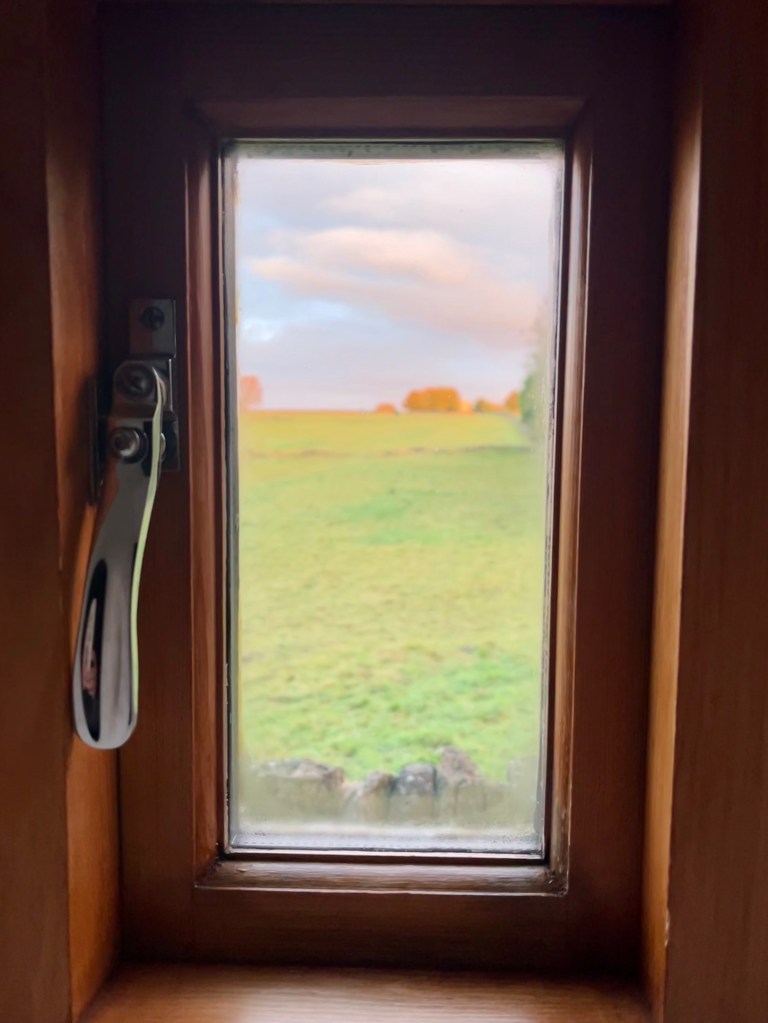
The view out our little window downstairs indicated a beautiful day ahead.
“Baby Blue” was ready and raring to go. Wearing clean socks, at last, we threw our wet weather gear and extra warm clothing (“Be Prepared”) into the back of the car and headed off for a day exploring the Peak District.
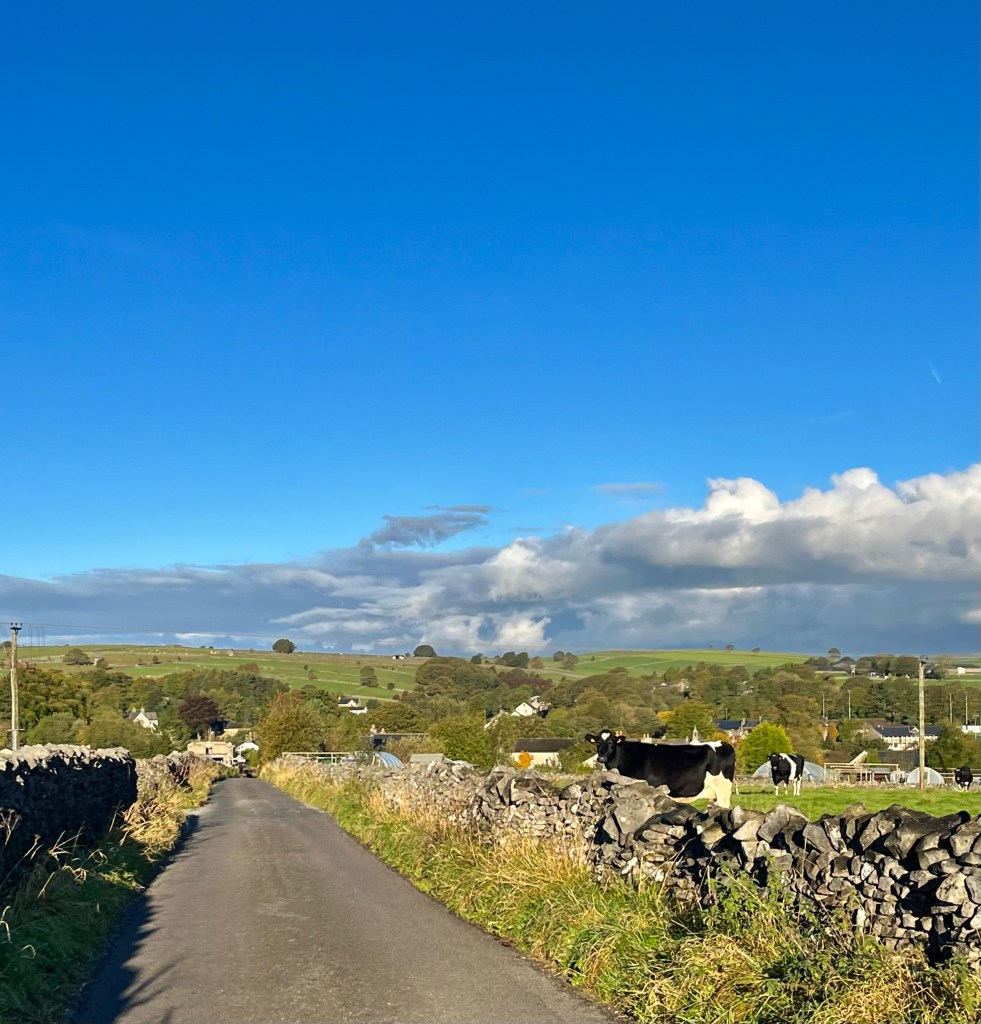
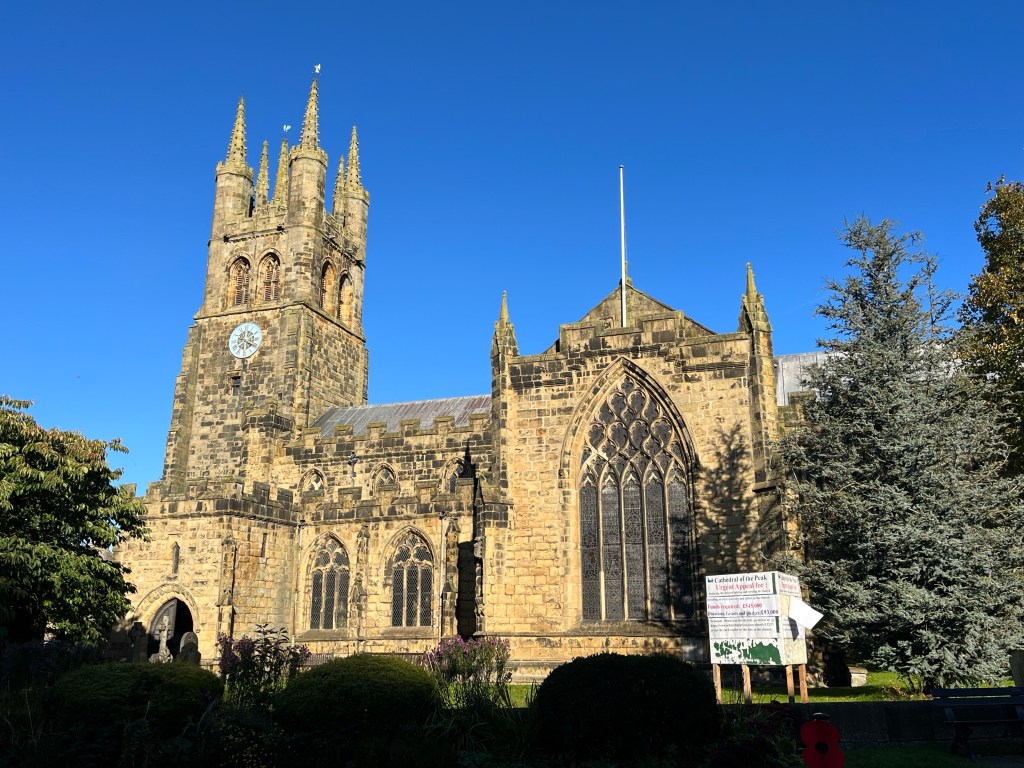
Our first stop of the day was the village of Tideswell , only a few kilometres away. We were greeted with the tolling of the Sunday Church bells from the “ Cathedral of the Peaks”. It was such a treat to hear.

We found a cool little café, Nellies, for breakfast, jam packed with people and dogs, dogs, dogs. The coffee was good, our first for several weeks! Yay!! The bacon and egg roll was good too.

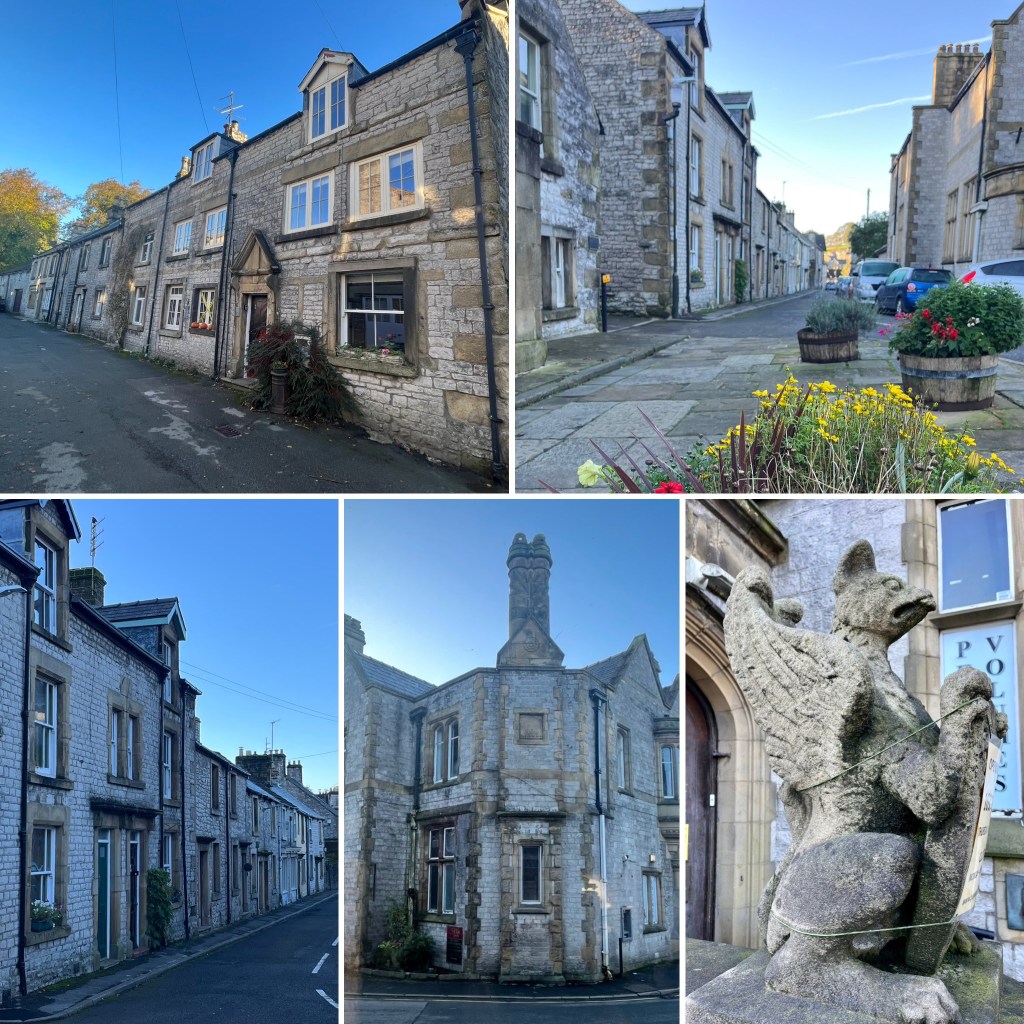
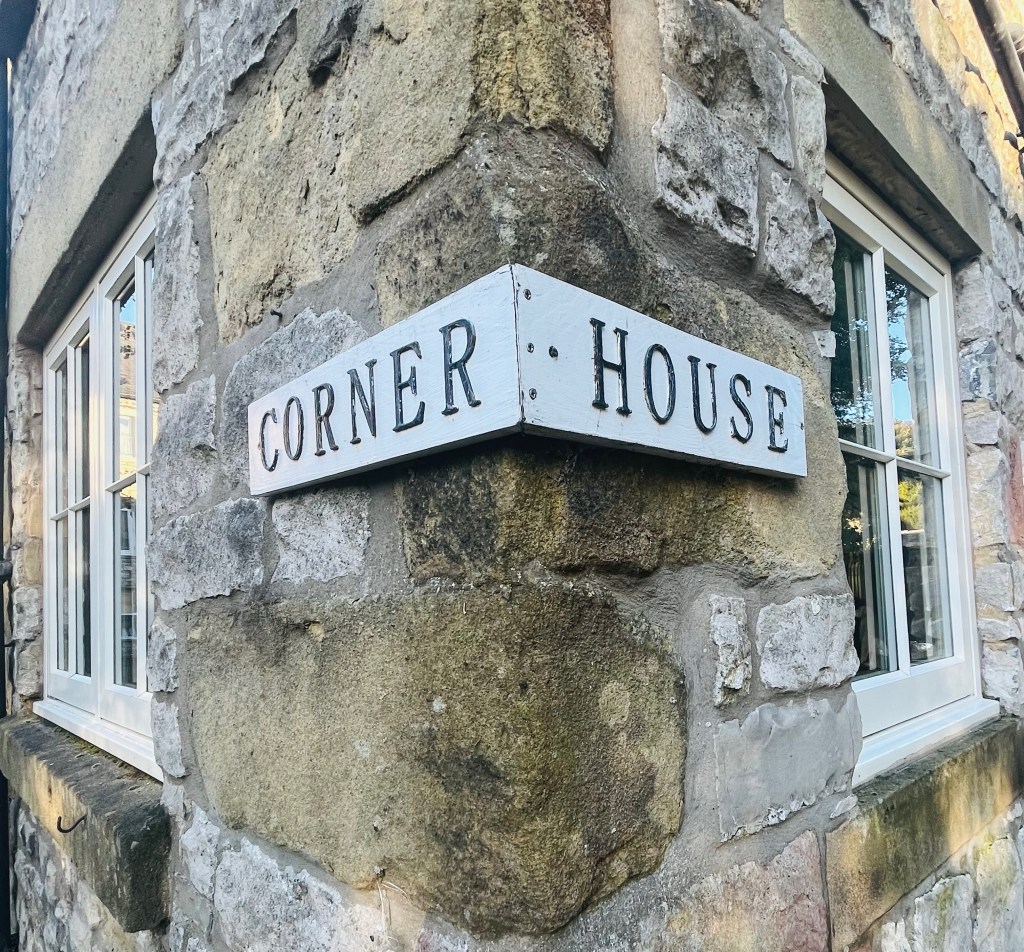
One of my favourite cottages was this appropriately named “Corner House”.
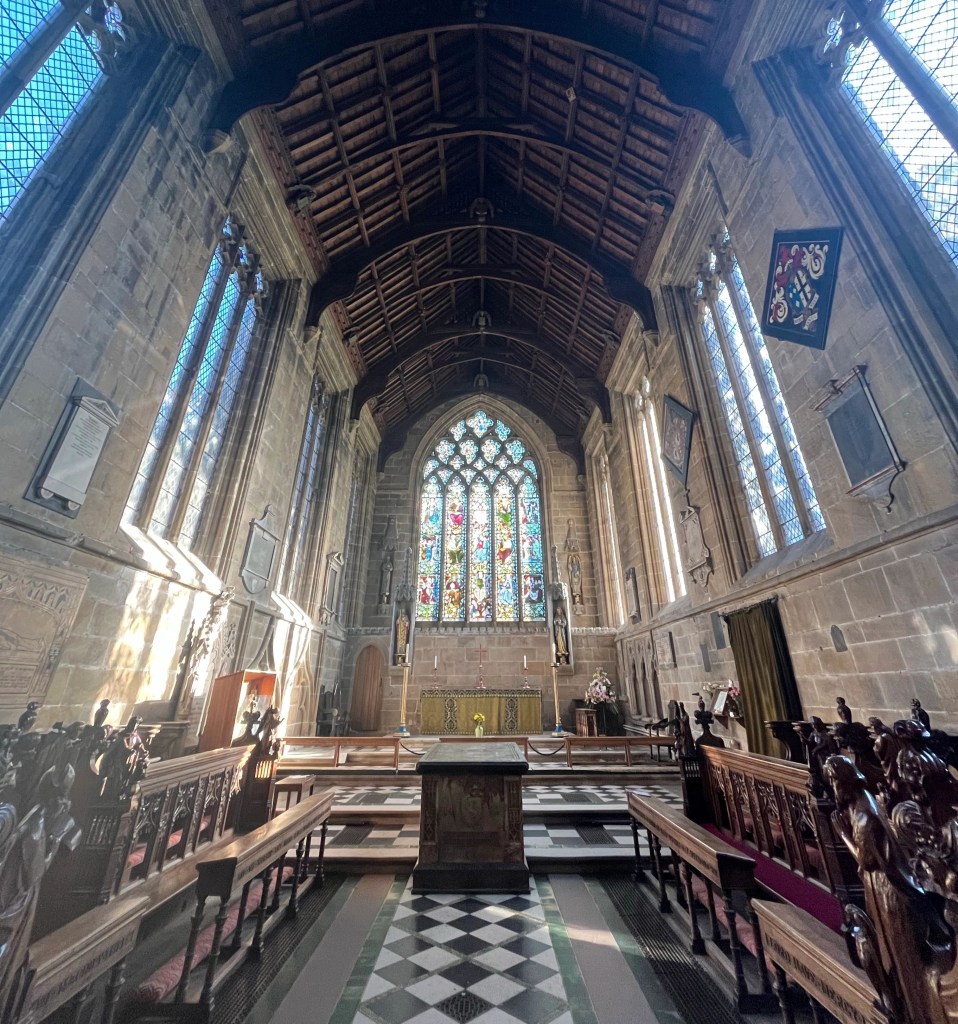
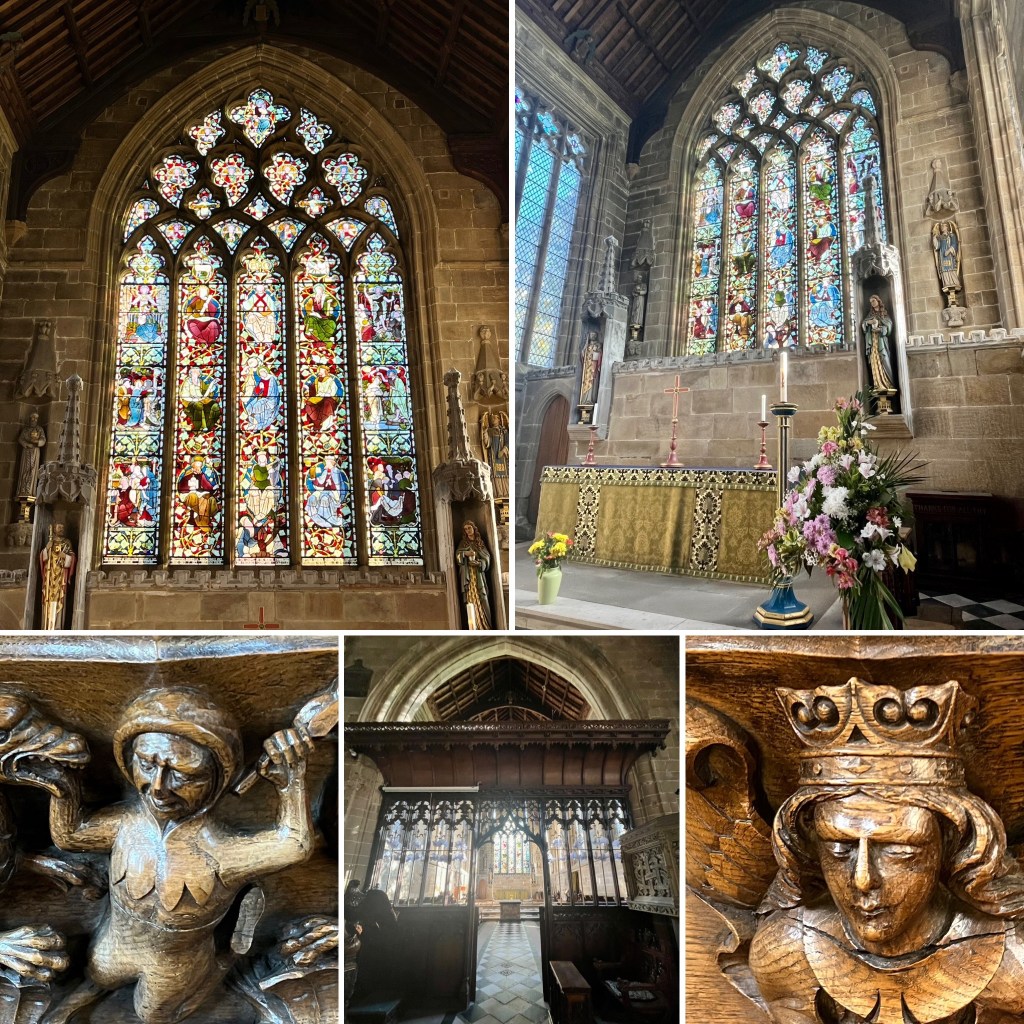
The church service at the “Cathedral” was over and the bells had finally stopped ringing. We wandered down to check it out.
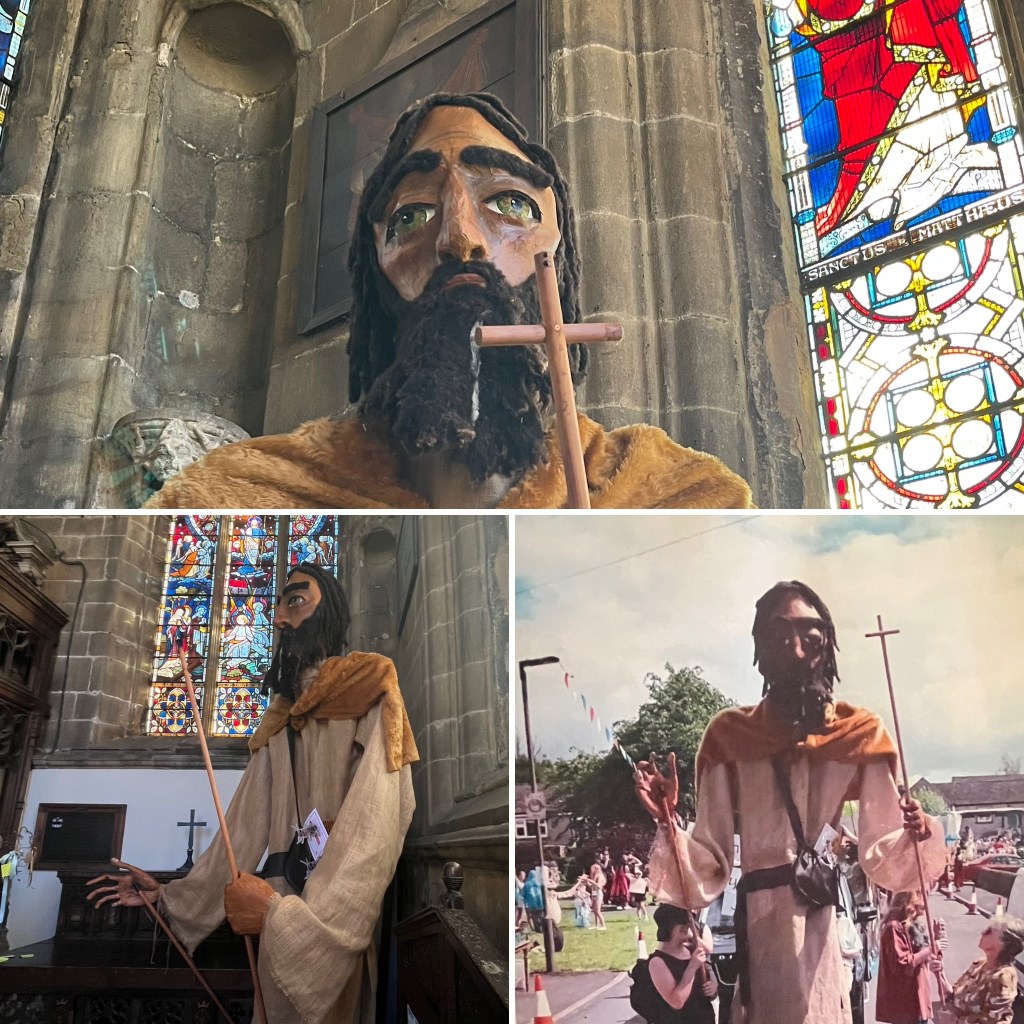
I got a bit of a shock when I walked into one section of the chapel to be confronted by this huge processional puppet propped in the corner. Representing John the Baptist, the giant takes to the streets for the Tideswell Carnival in June.
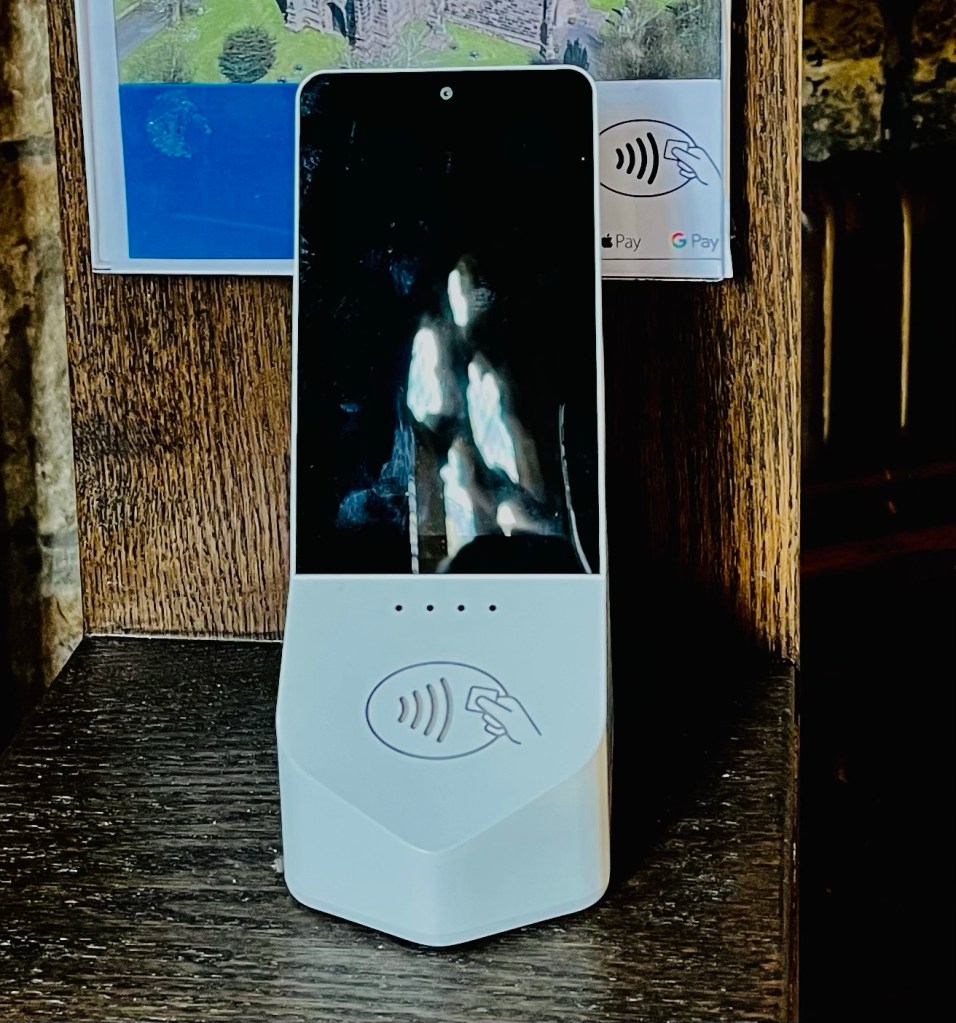
The church has gone all 21st Century with its fundraising. Gone is the donation box. It’s all electronic now. Pay wave away your Pounds!
We enjoyed wandering around Tideswell but we had a full day planned so it was time to move on.
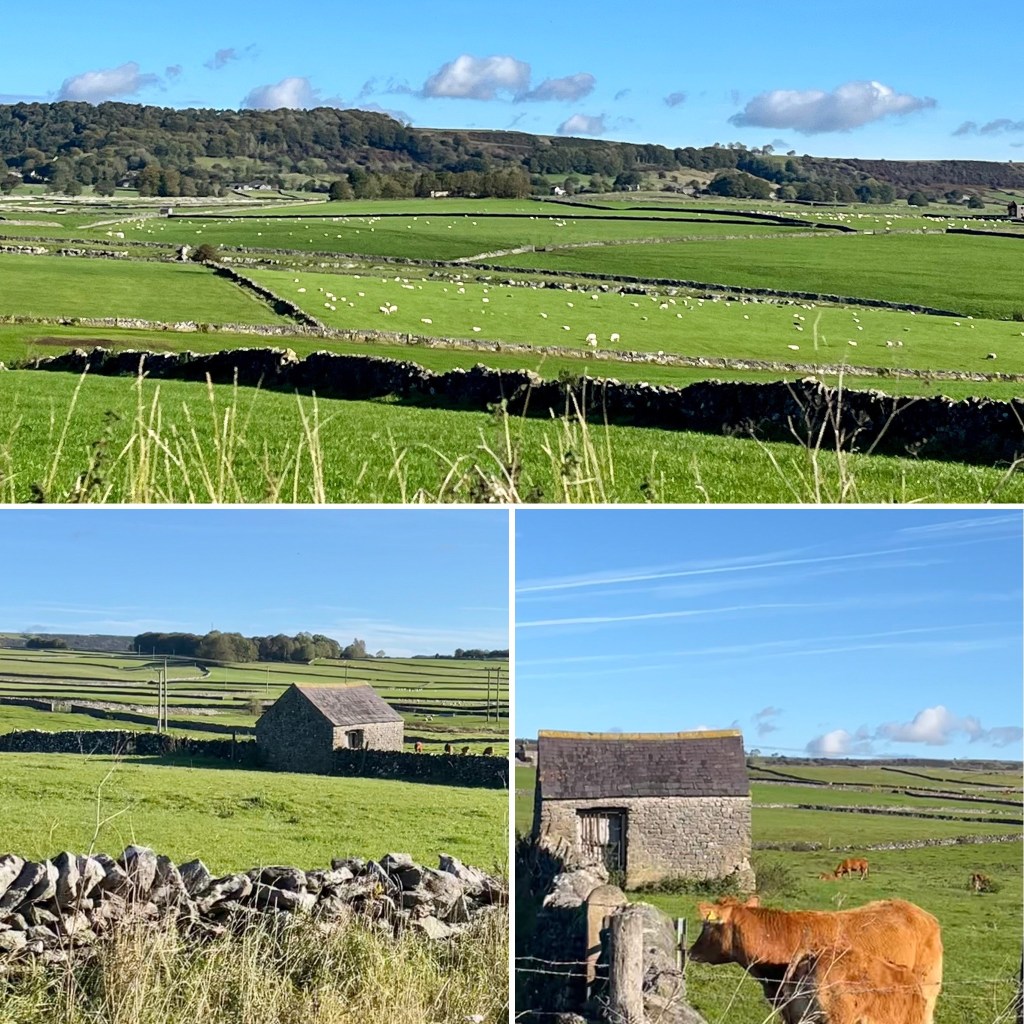
The countryside was truly stunning. Stone fences everywhere, criss-crossing the rural setting.
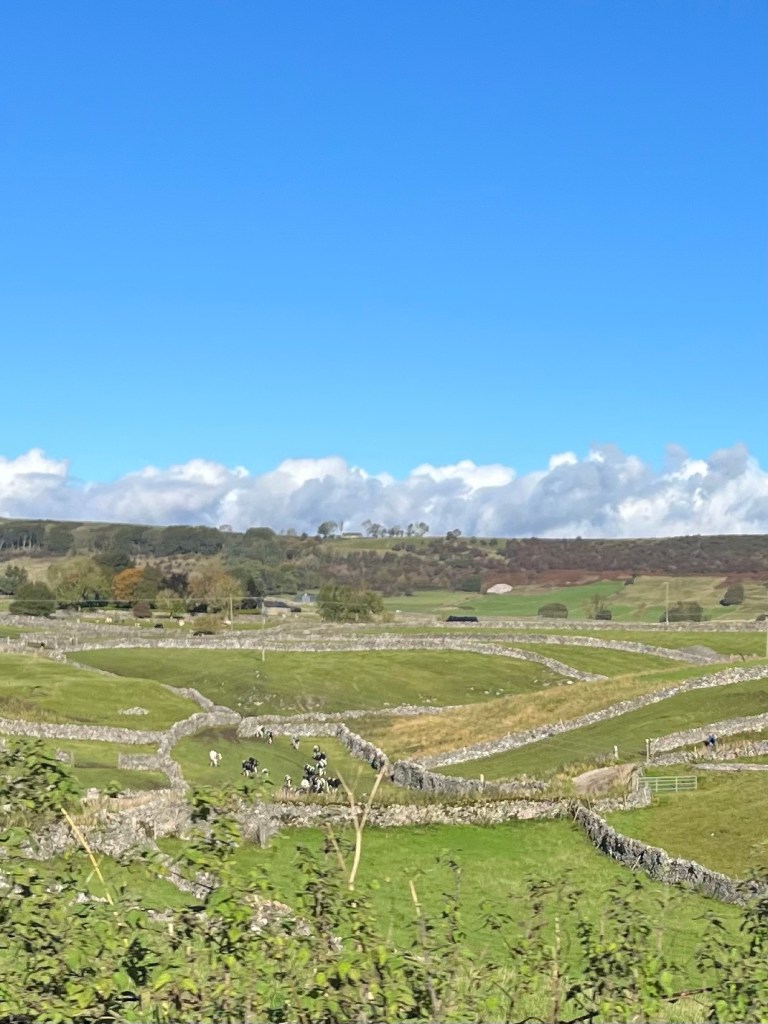
Our next stop was the “plague village” of Eyam.
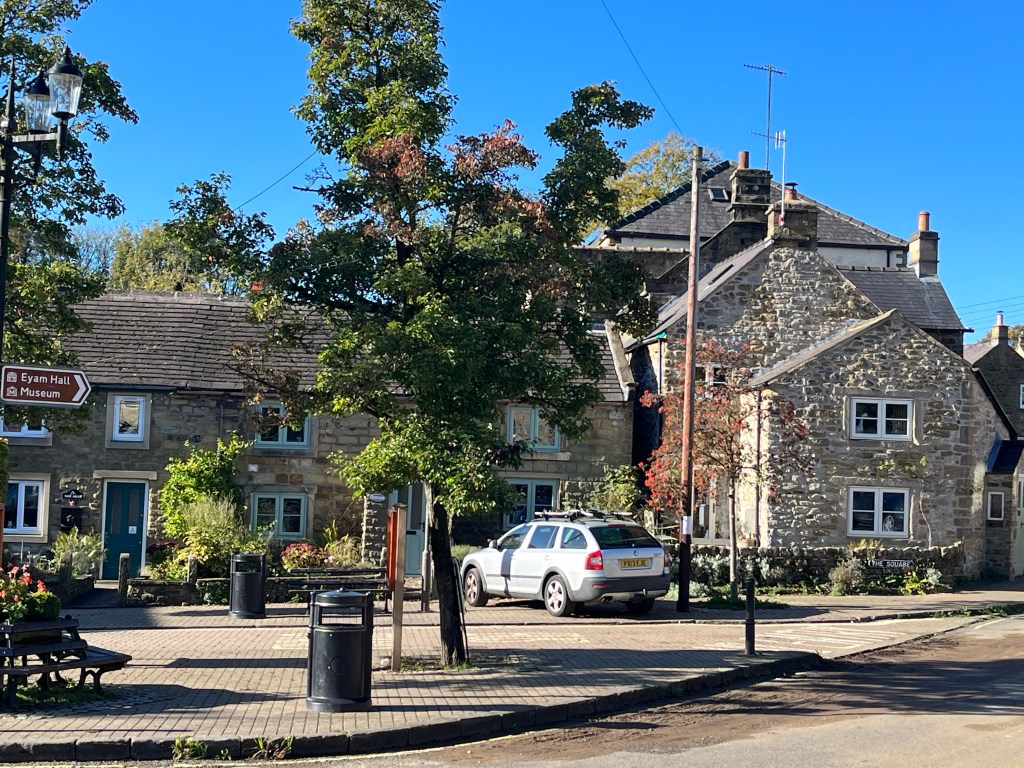
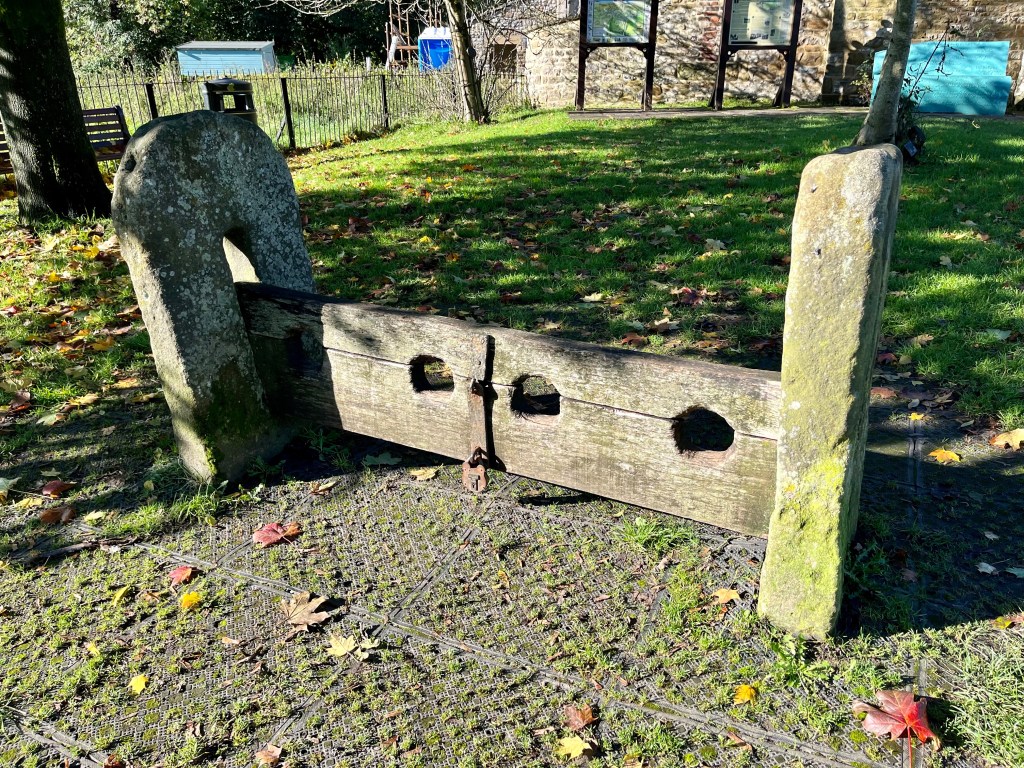
Omg, what a place!! Given our recent experience with Covid-19, the parallels are amazing. The plague arrived in Eyam in 1665, in a load of textiles from London and spread quickly. The local church leaders devised a plan to help “stop the spread” and fortunately for the other nearby villages and towns, it eventually worked. Public gatherings were banned, social distancing was enforced, the village was isolated with strict borders, masks were worn, food and medications were dropped at a boundary stone, and vinegar was used as a disinfectant. Sound familiar??
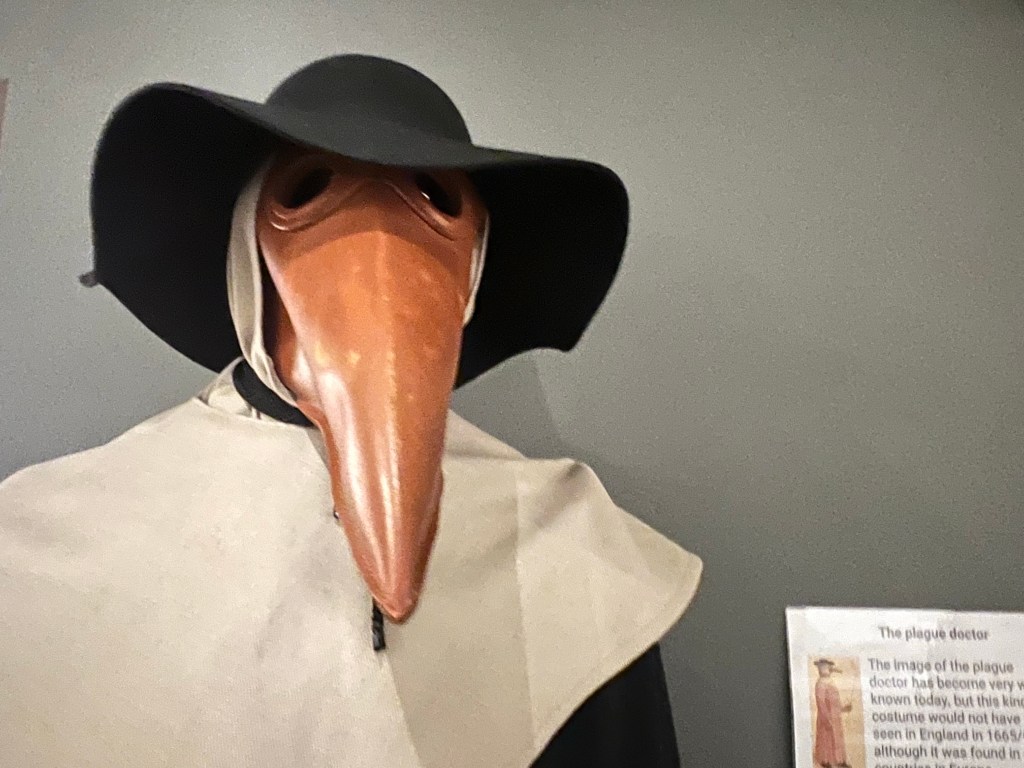
The plague raged for 14 months in Eyam. 260 people, about a third of the villagers, died. Instead of fleeing, they isolated themselves and in doing so prevented the plague from spreading.
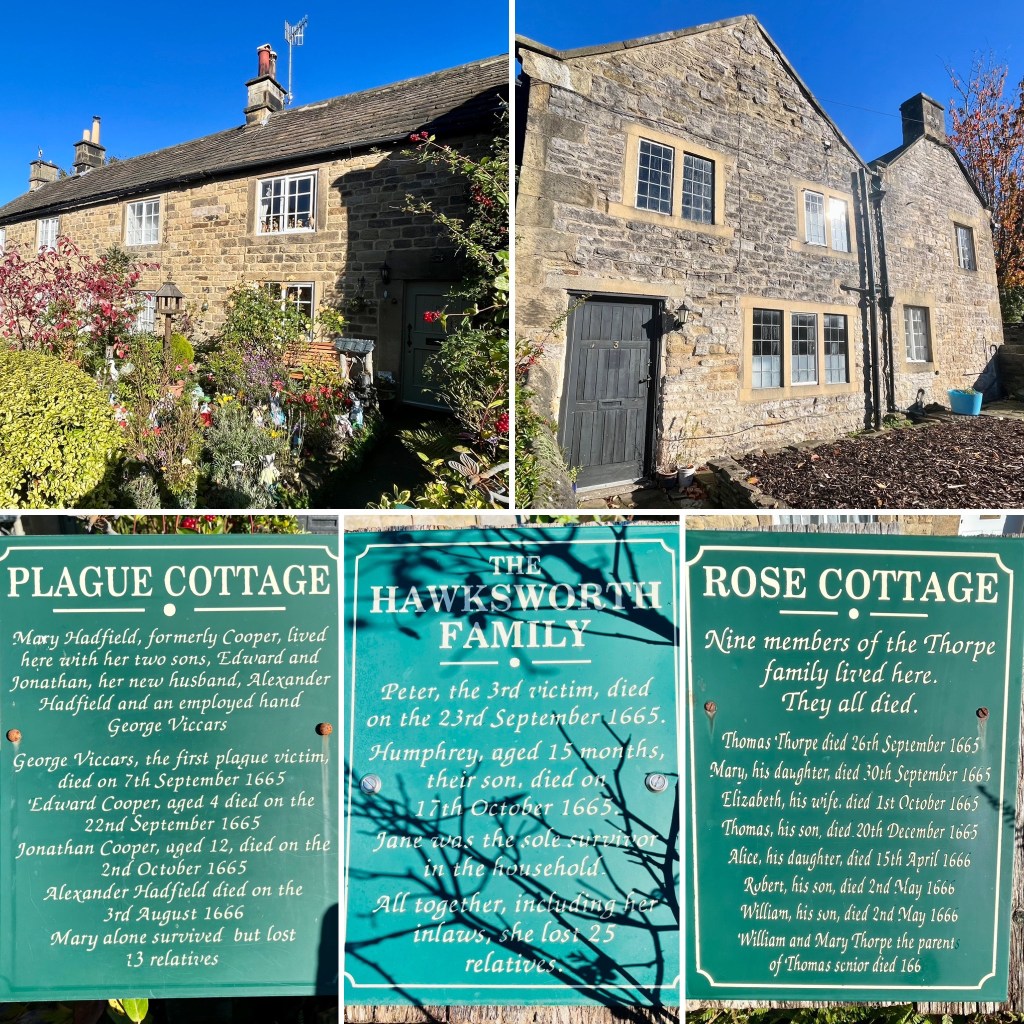
We walked past the “Plague Cottages”, 3 little stone cottages at the epicentre of the outbreak. The green plaques outside telling the sad story. (There are many of these plaques, sadly, to be found throughout the village).
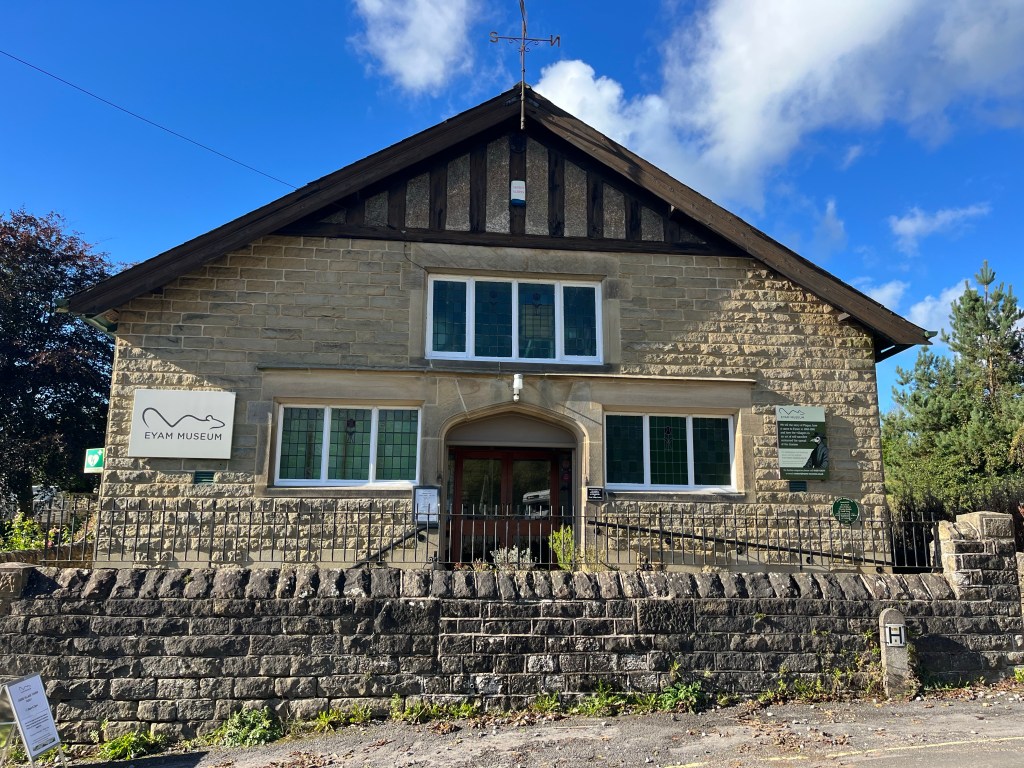
We walked to the Museum and spent close to an hour, learning about the life cycle of fleas, their ideal breeding environment (wet and warm) and gaining a great admiration for Reverend Mompesson and his mentor Rev. Thomas Stanley, and the villagers, who , despite knowing their fate, complied with the “rules” imposed on them.
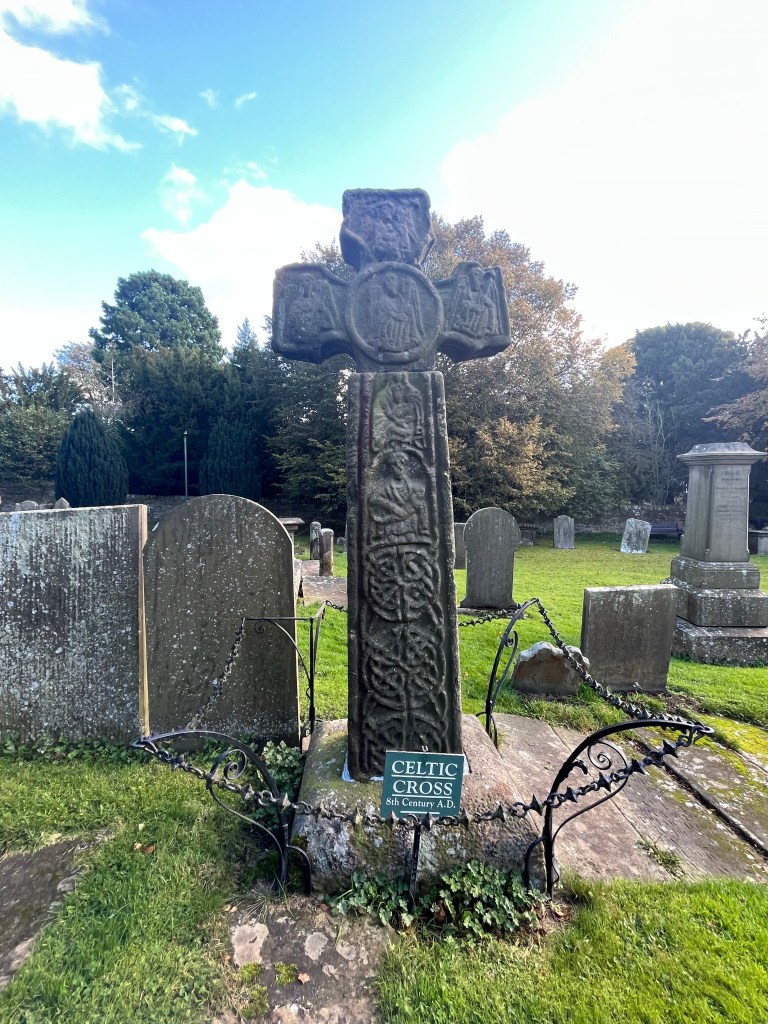
St Lawrence’s parish church in Eyam has an 8 ft high Saxon Celtic cross dating from (possibly) the 8th century situated in its churchyard. That’s pretty old!!
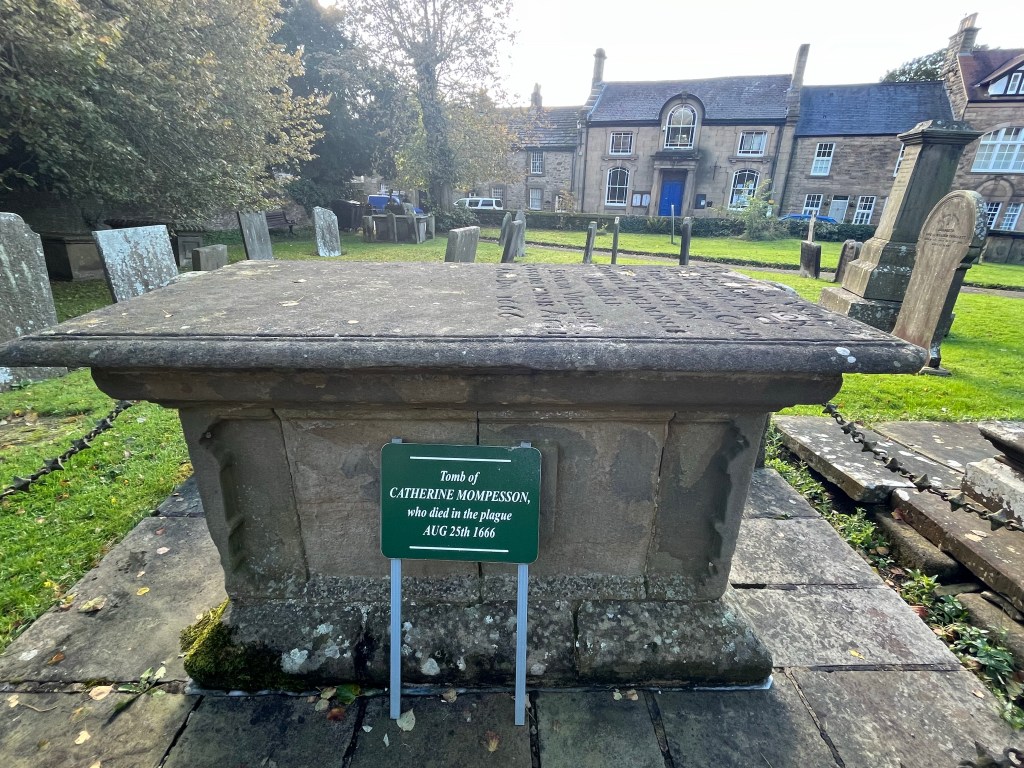
It’s other notable object in the churchyard is the tomb of the Rev. Mompesson’s wife, Catherine, who died from the plague and is the only plague victim to be buried in the church yard. It was one of the Revs “rules” that all those who died from plague had to be buried elsewhere (fields, paddocks, back yards etc.) to avoid contamination. I’m not sure why she was allowed in the church yard.
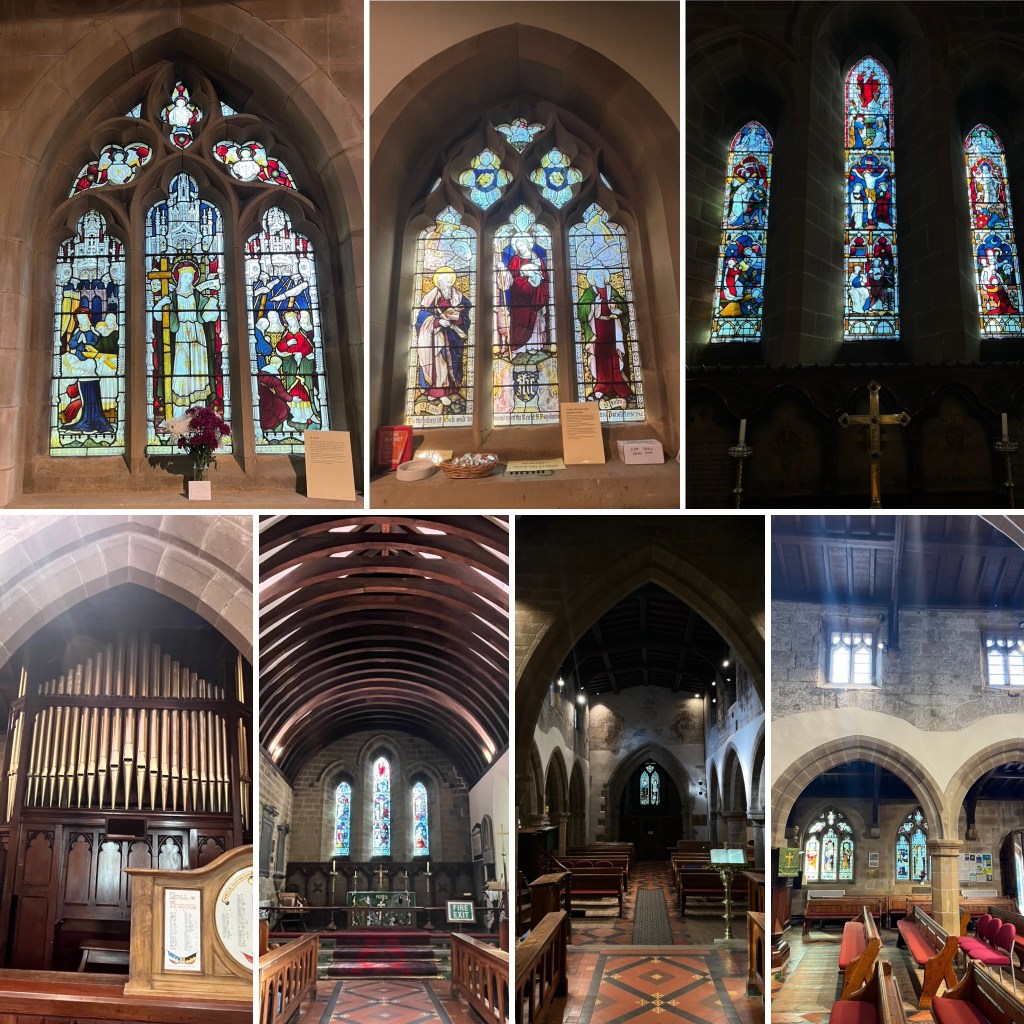
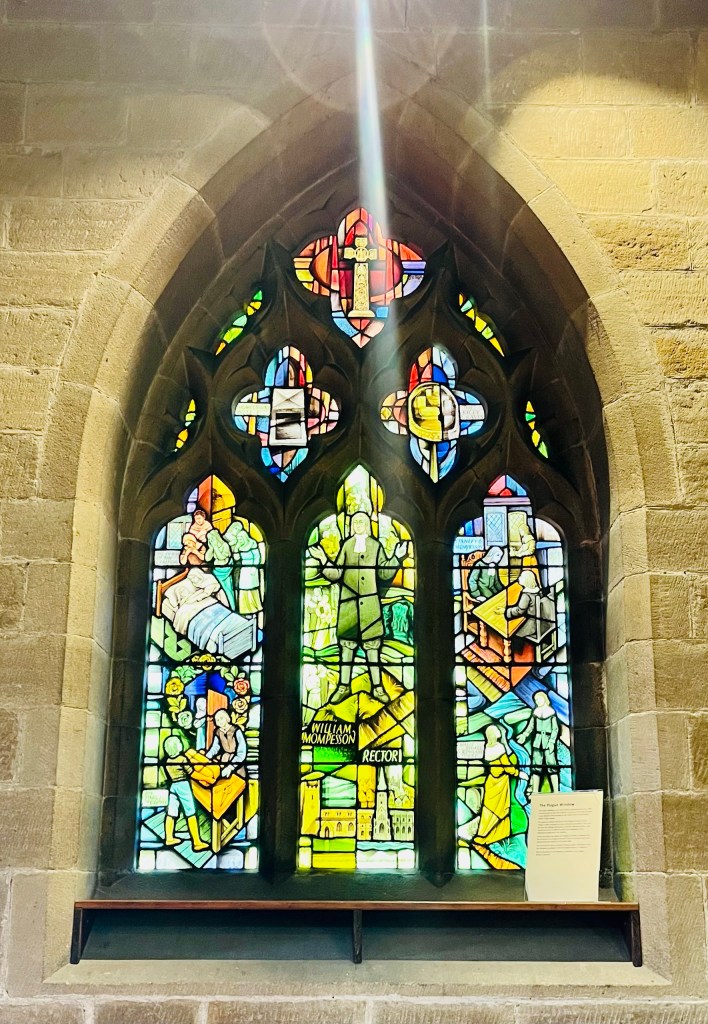
Inside was lovely! And emotional!!

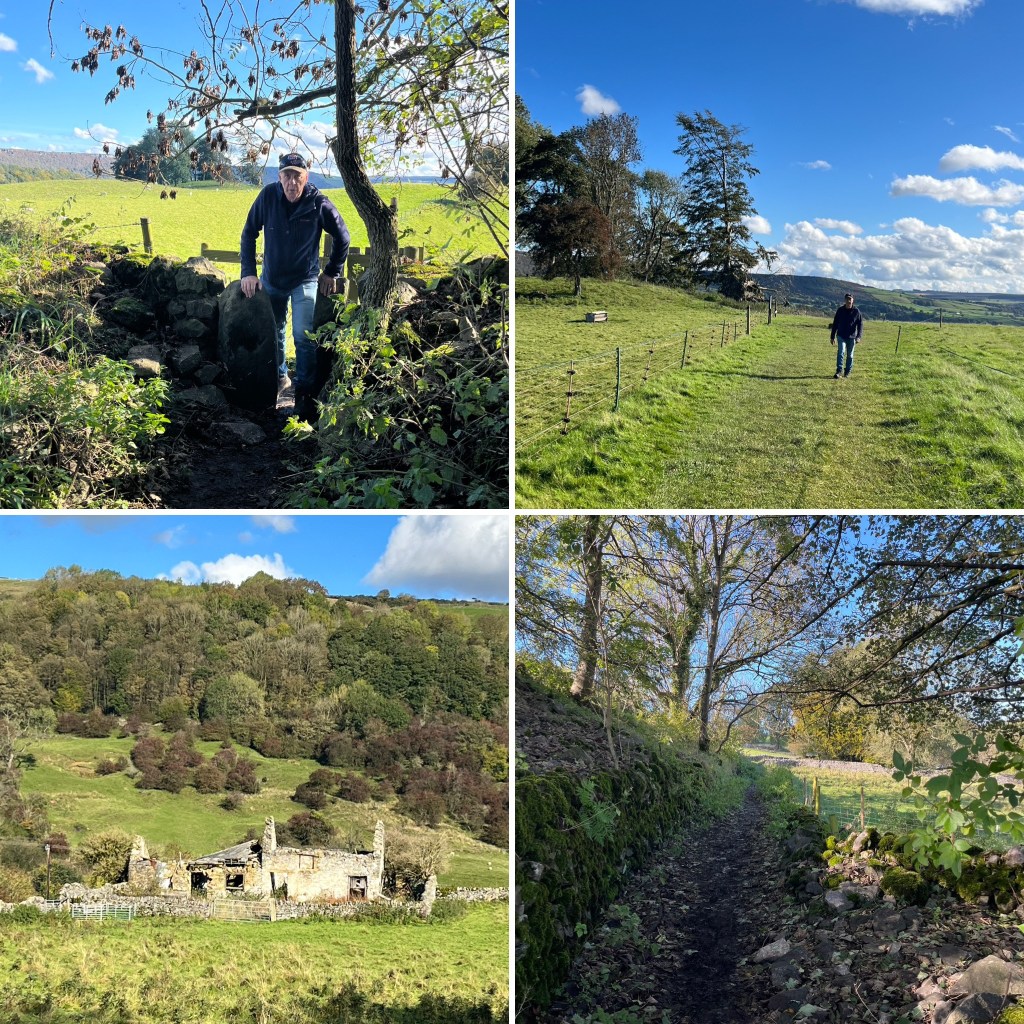
We decided it was only fair that we too should make the cross country walk to the Boundary Stone outside the village.
It was a 20 minute walk from the edge of town, but well worth it. The sun was shining, the birds were singing and our boots were already muddy.
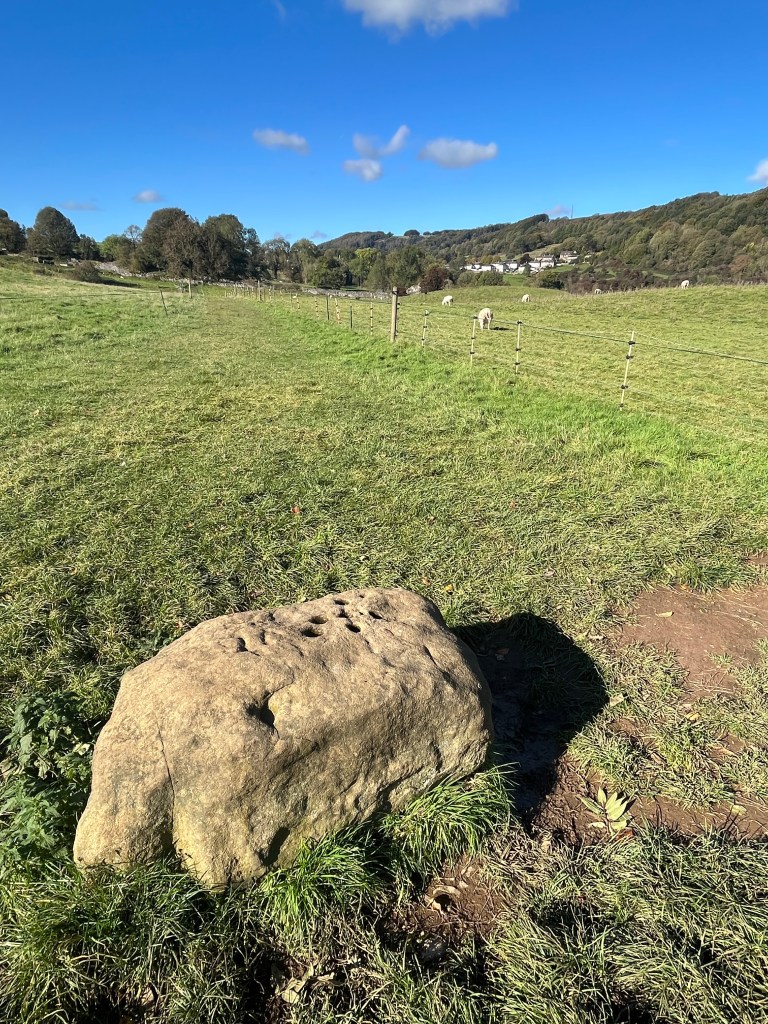
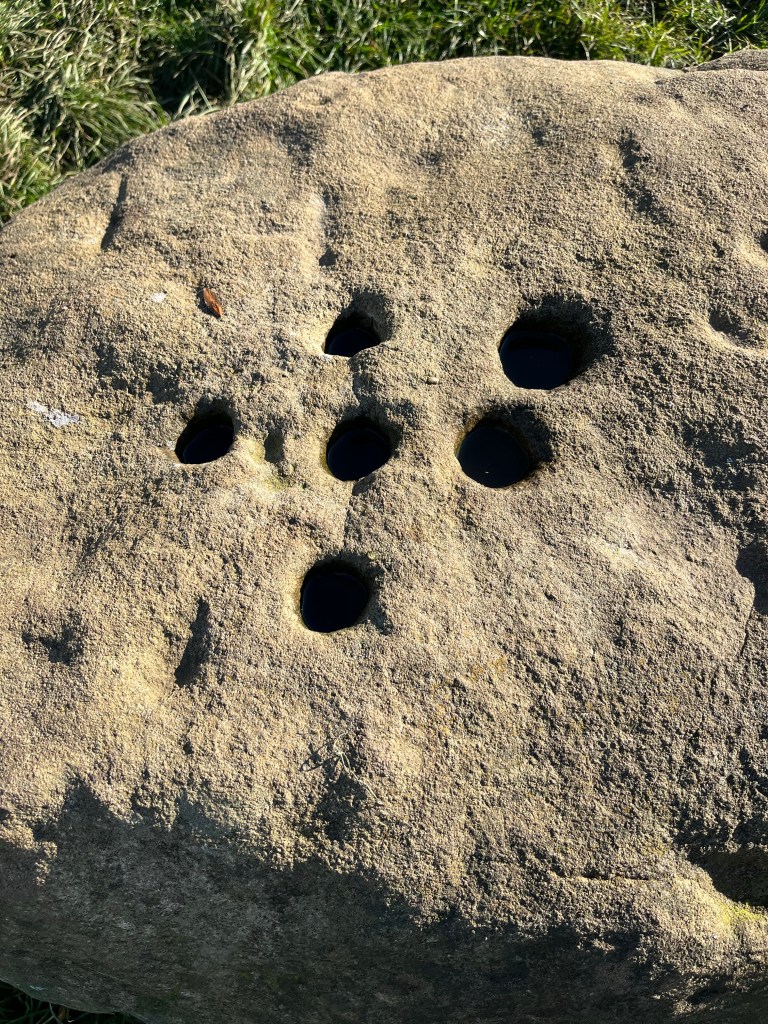
The Stone itself was perched up high on a ridge, offering a view down to the village of Stony Middleton. Villagers there would bring up food and medications and leave them on the stone. The Eyam villagers would walk down later in the day, leave money, if they had any, in the vinegar filled holes in the stone, and take the supplies back to Eyam.
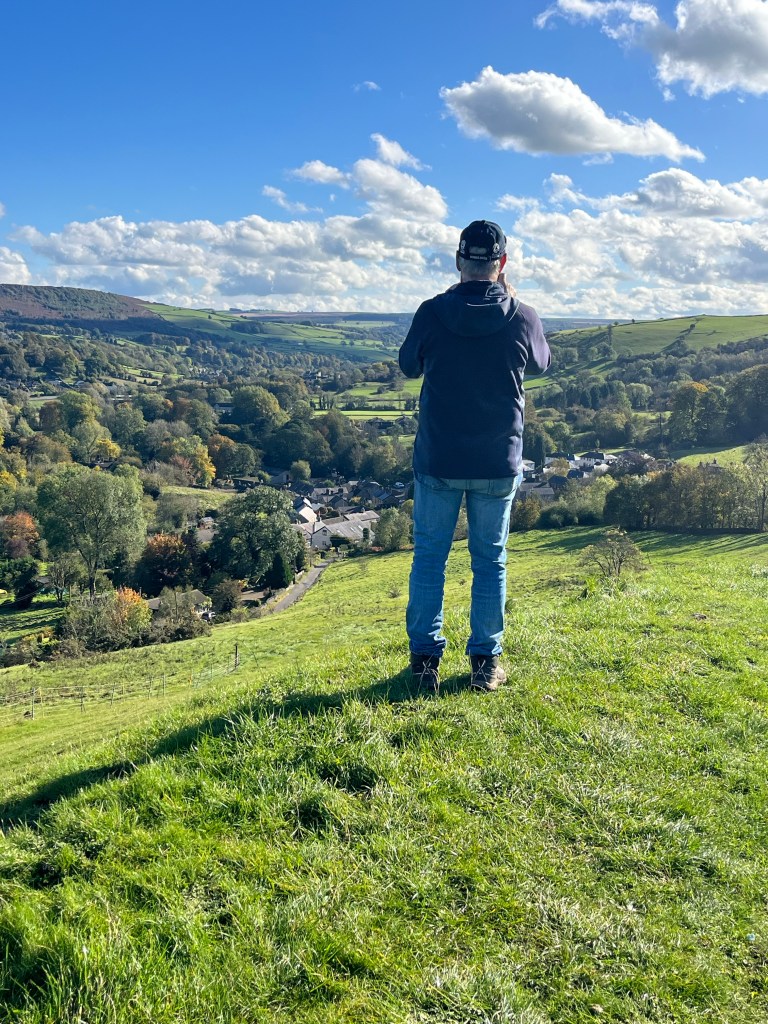
It was quite an emotional walk, but we are glad we did it.

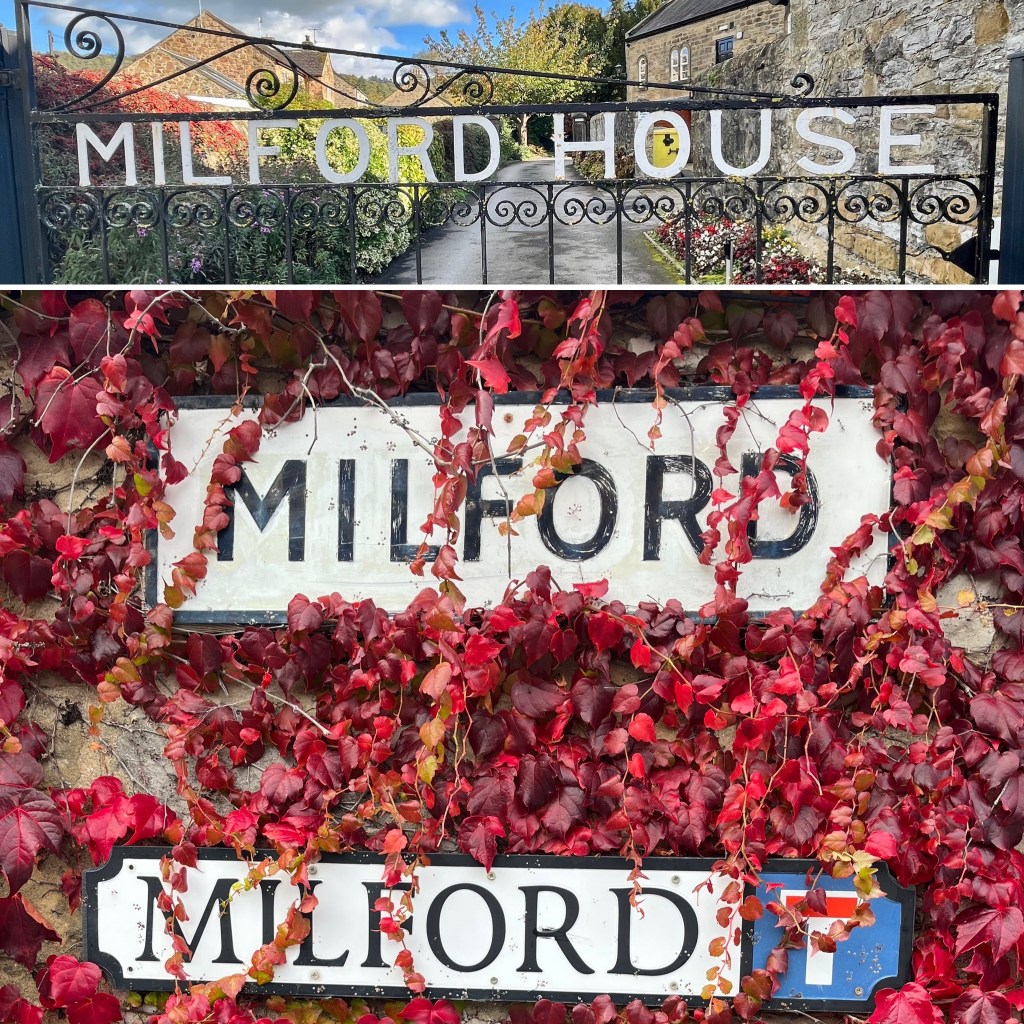
The town of Bakewell was next on our list. We parked at Milford House (reminding me that we are only a few days away from our very own Milford!!! ).
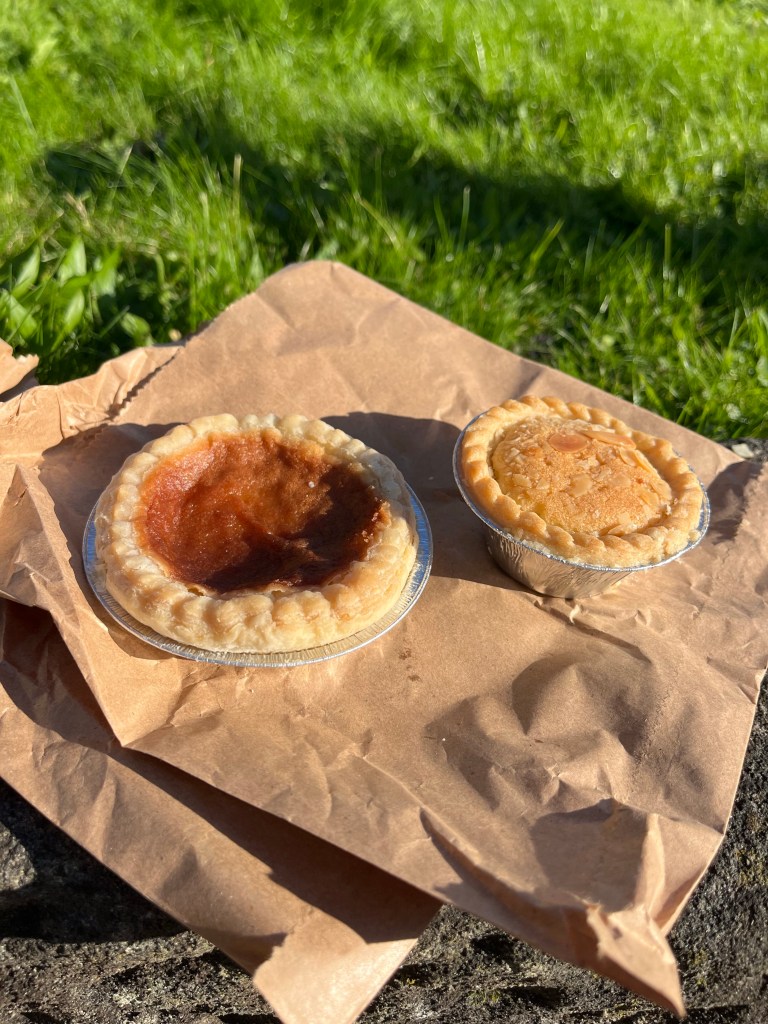
Our main reason for coming to Bakewell was to purchase and sample its famous (infamous?? ) Bakewell Pudding. Rumour has it that the first attempt was actually a flop, but people liked it, so they just kept replicating it. We also purchased some Bakewell tarts and later sat in the Church yard undertaking the “Which is Best?” Taste test. More on that later.
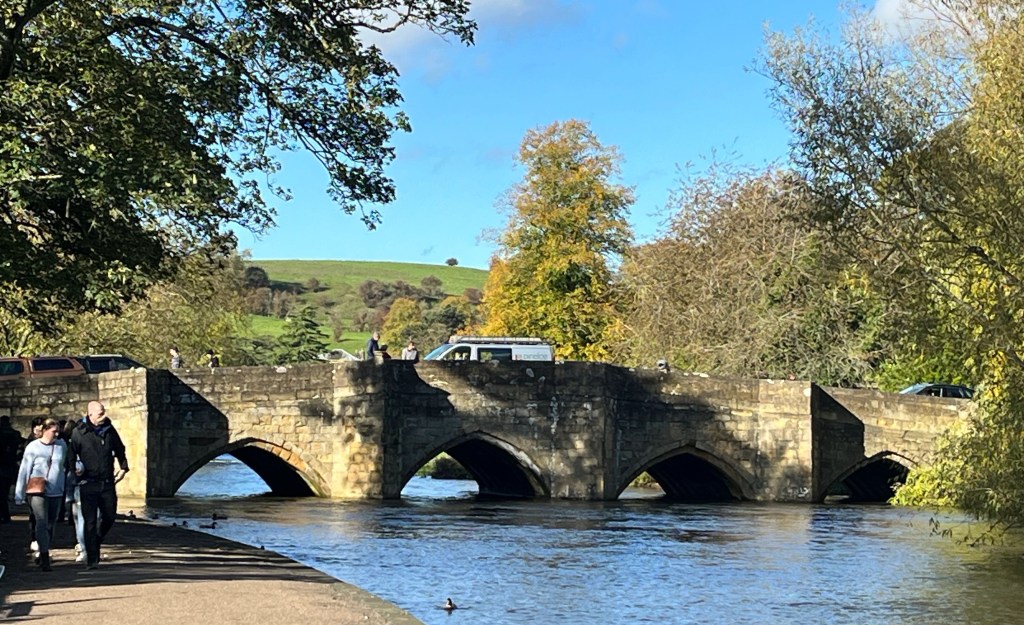
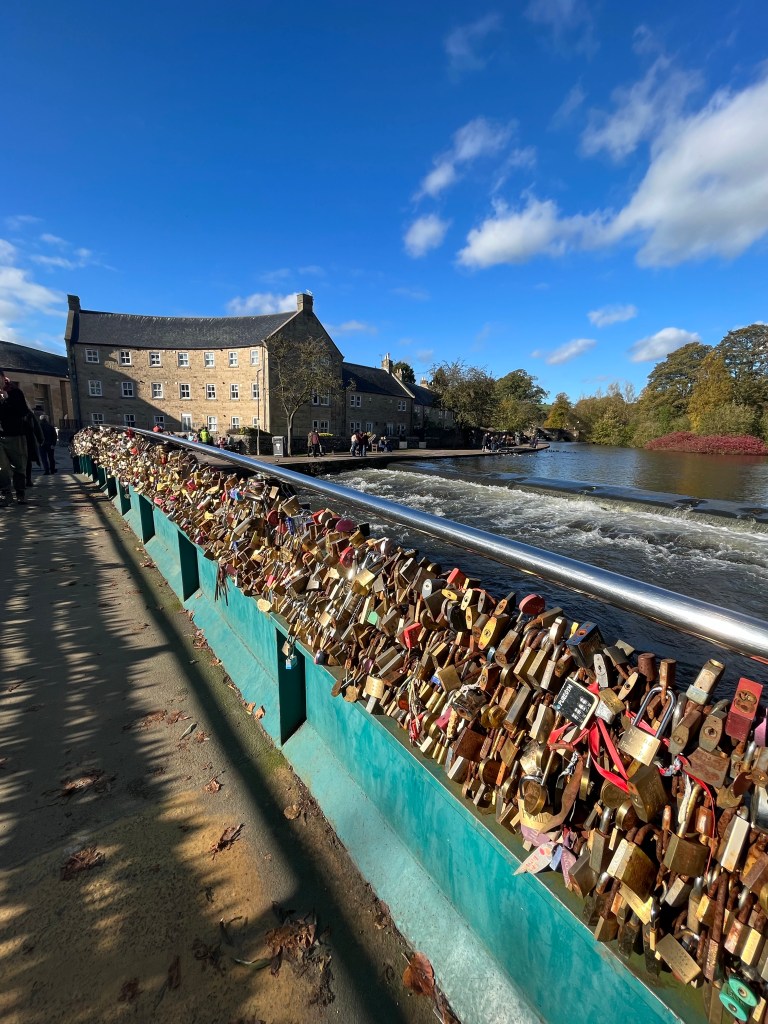
We crossed the lovely old grade I listed stone arch bridge spanning the River Wye. The water level was still high from a few days ago. We then came across a love lock covered pedestrian bridge. Once again, we didn’t see the need.
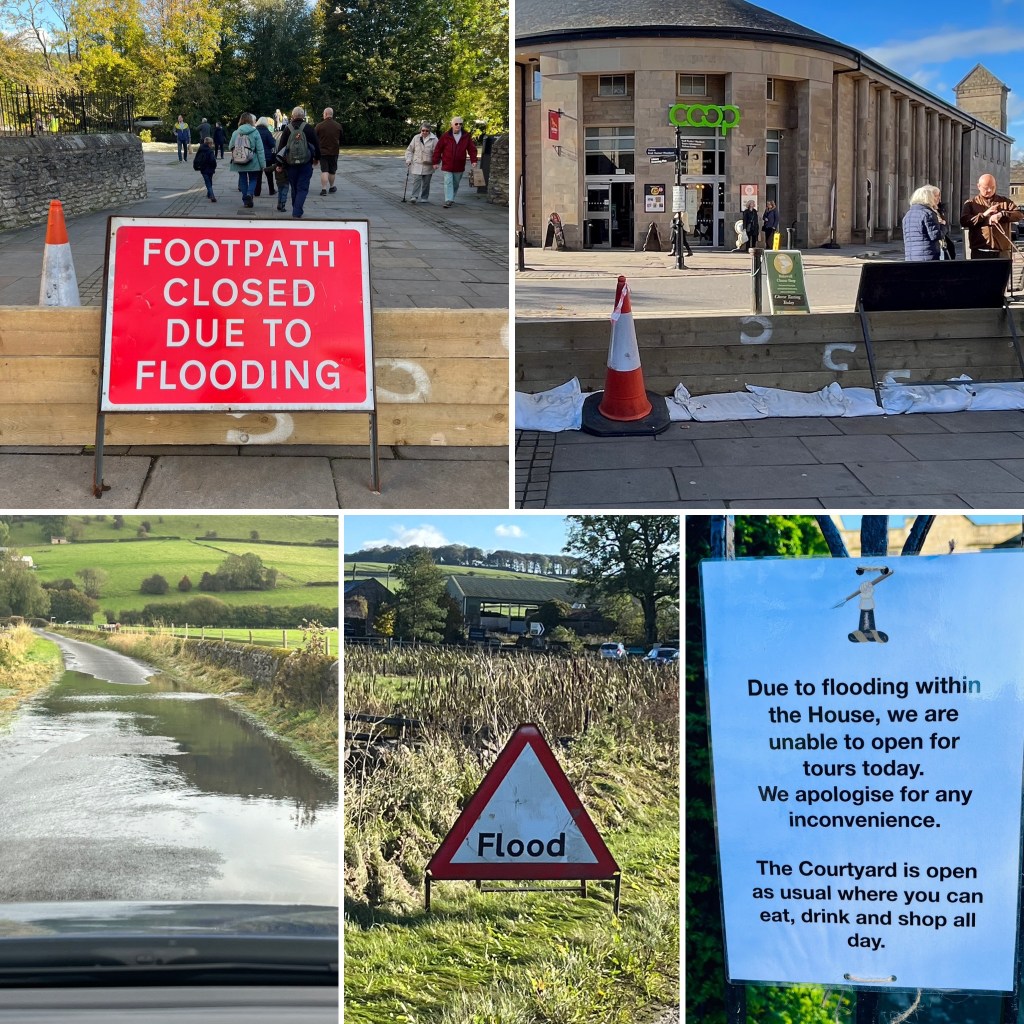
The evidence of the flooding deluge a few days ago has been very evident. Sandbags against cottage front doors, Flood warning signs, road closed signs and water barricades have been sighted regularly and Bakewell had its fair share.
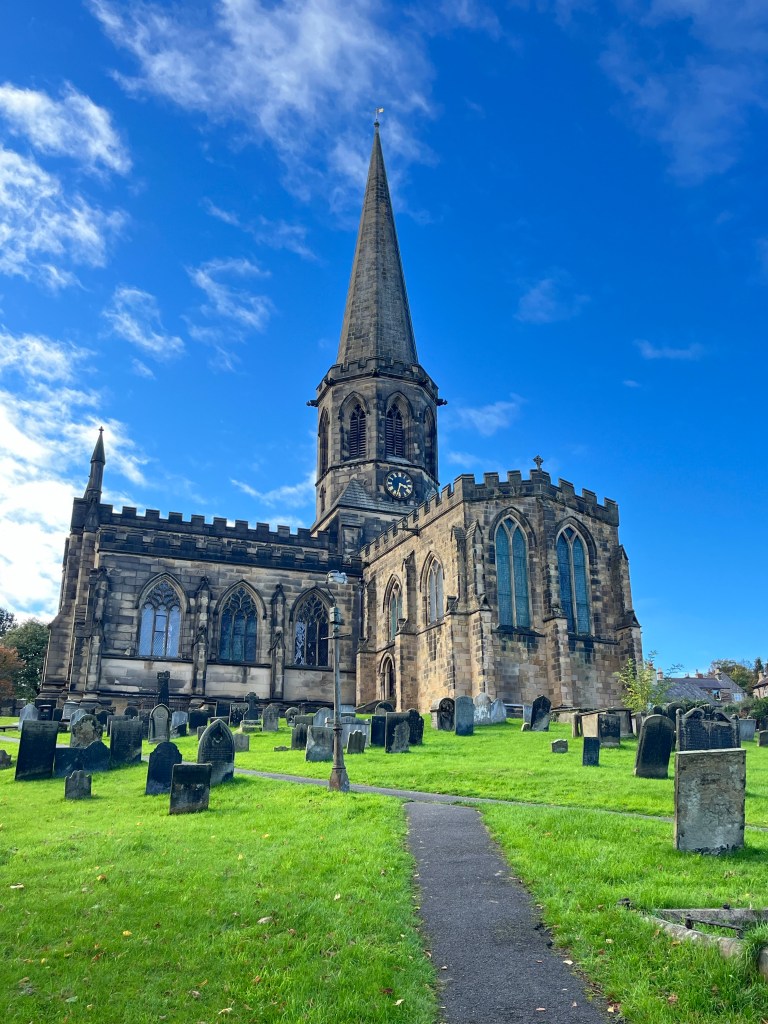
We headed up to the church to check it out and more importantly sit in the church yard and undergo our taste test.
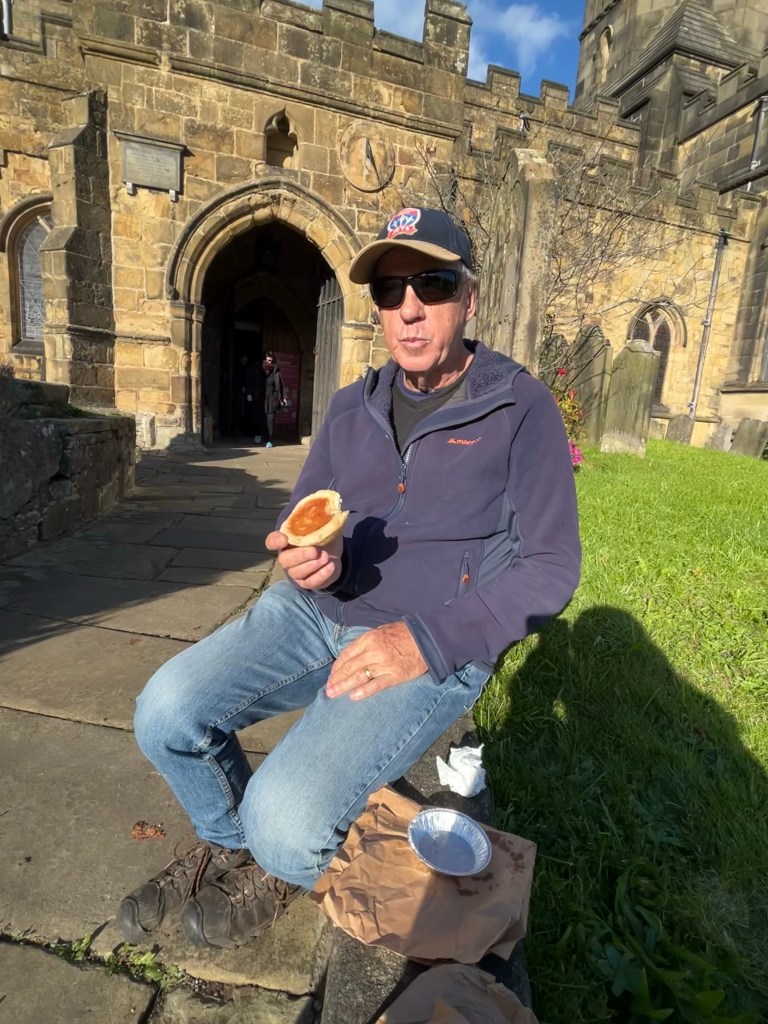
The verdict was unanimous. Bakewell Pudding is much nicer than Bakewell Tart. And to be perfectly honest, I’m not sure I was a fan of either!!!
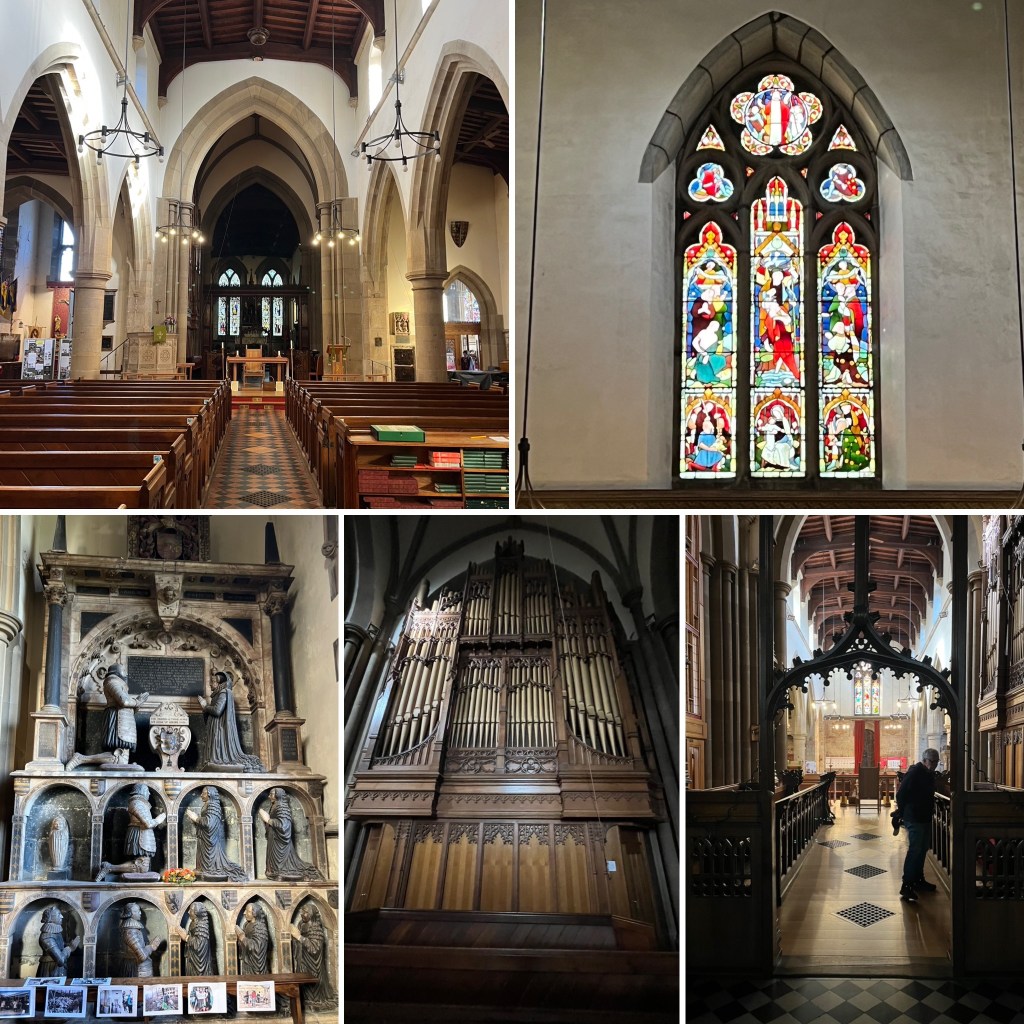
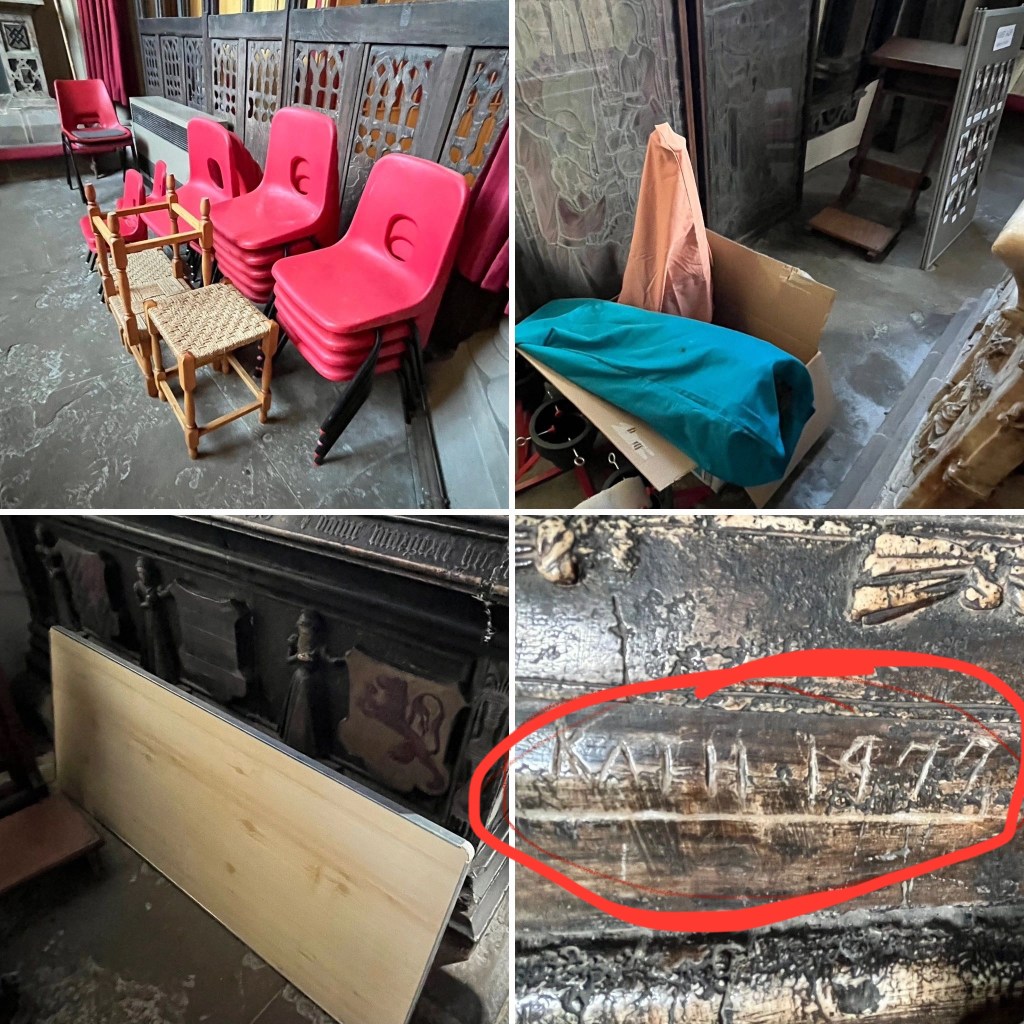
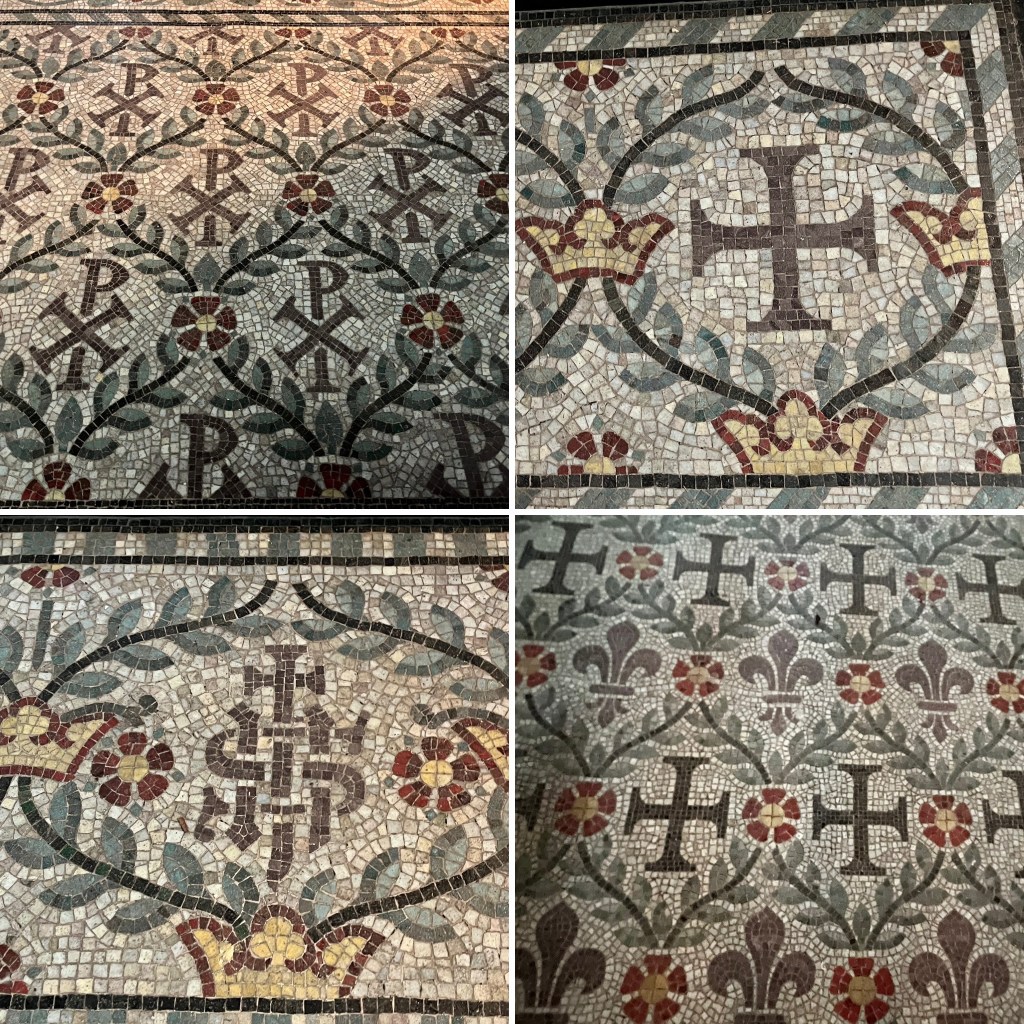
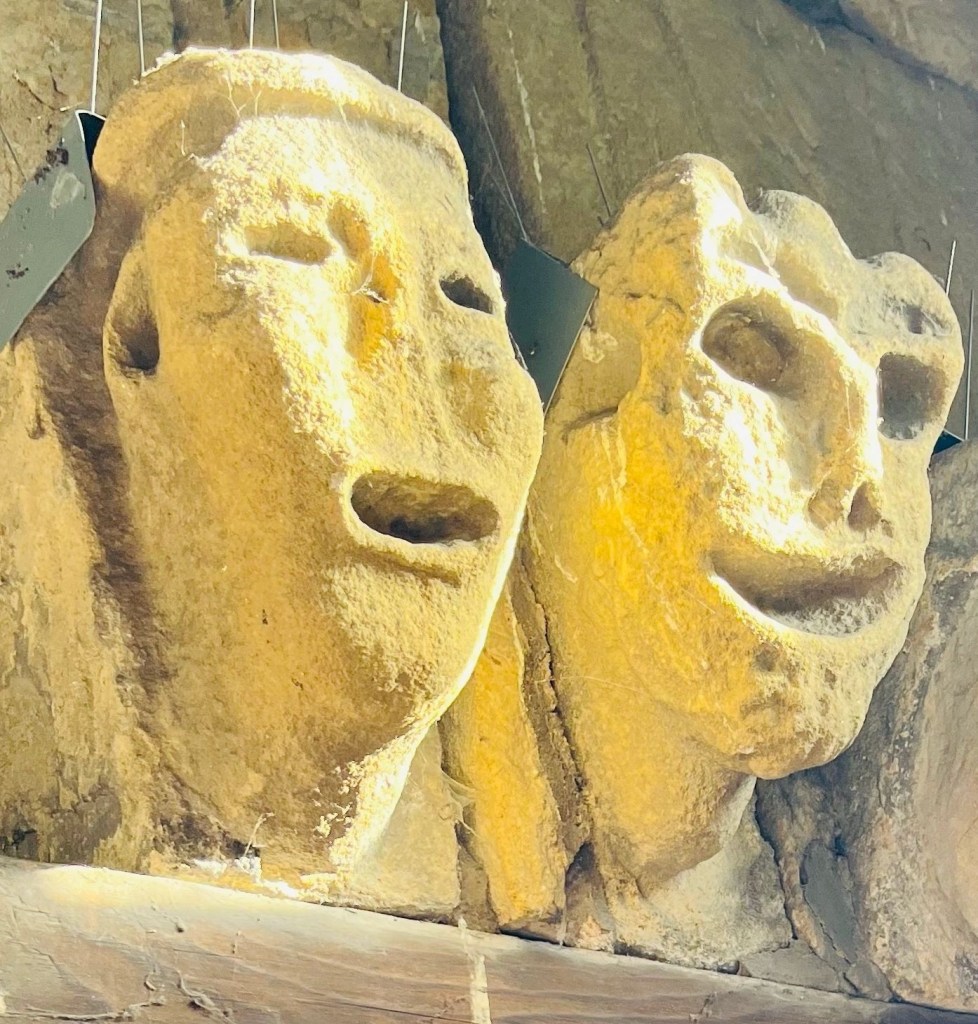
Inside the church was an interesting combination of beauty and mess. It had a beautiful tiled mosaic floor and a whole pile of junk not very carefully stowed away.
It was time for a walk, we thought. So off we went in search of the Nine Ladies Stone Circle. We drove to where we thought we would easily access these ancient monuments.
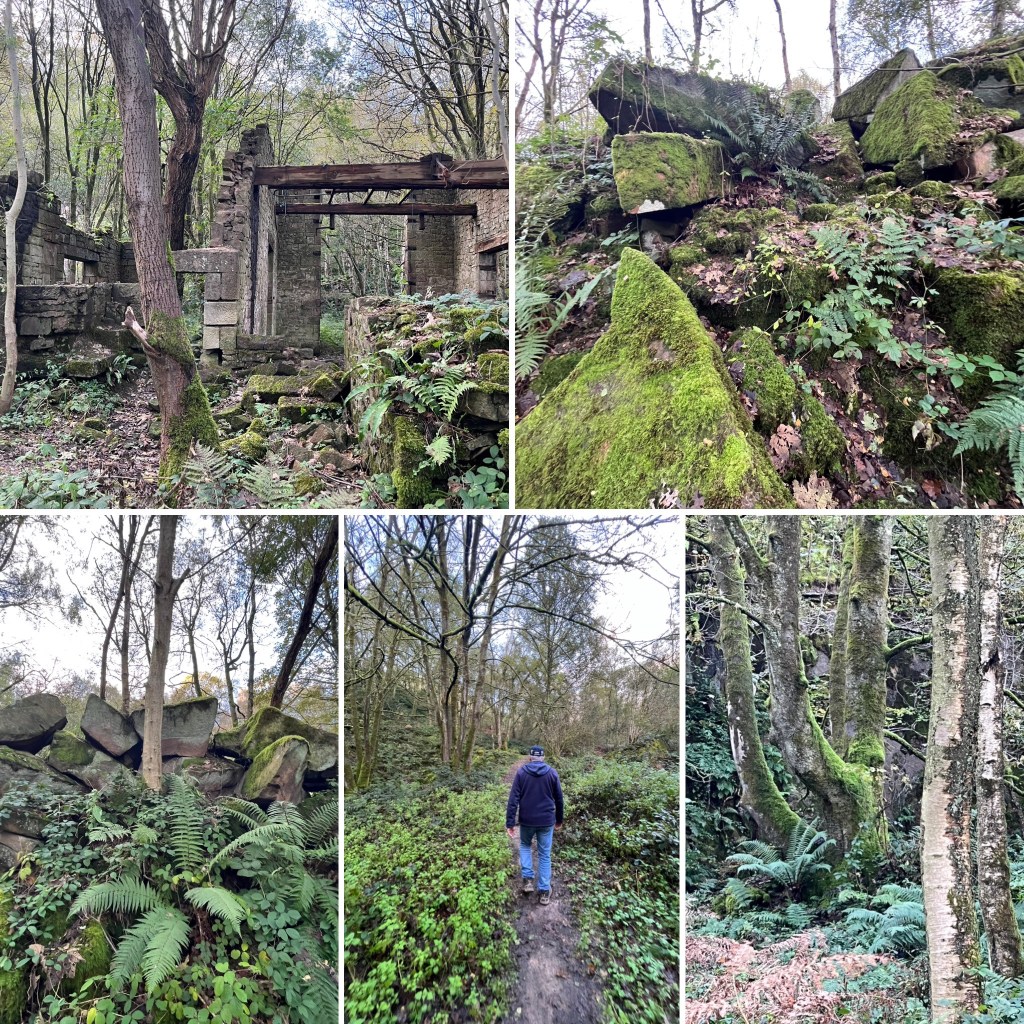
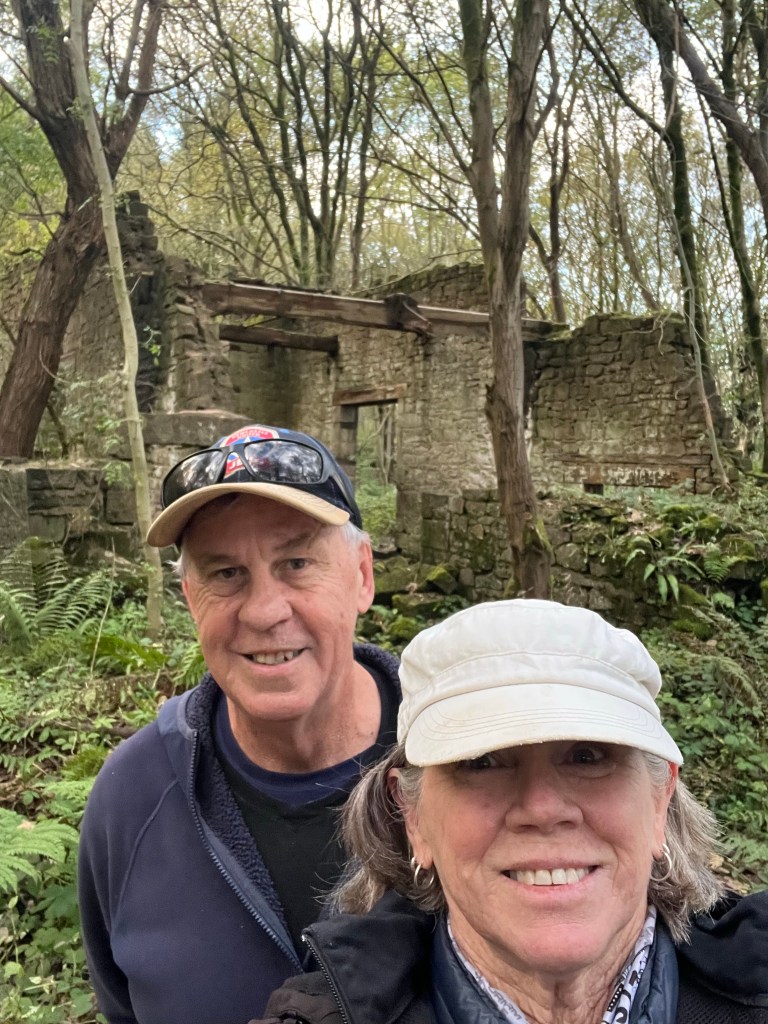
Unbeknown to us, it really was a hike! We took about 45 minutes (3.7 kms) through muddy tracks, past old derelict limestone mills, through piles of discarded mine rock and many millstones scattered in the woods.
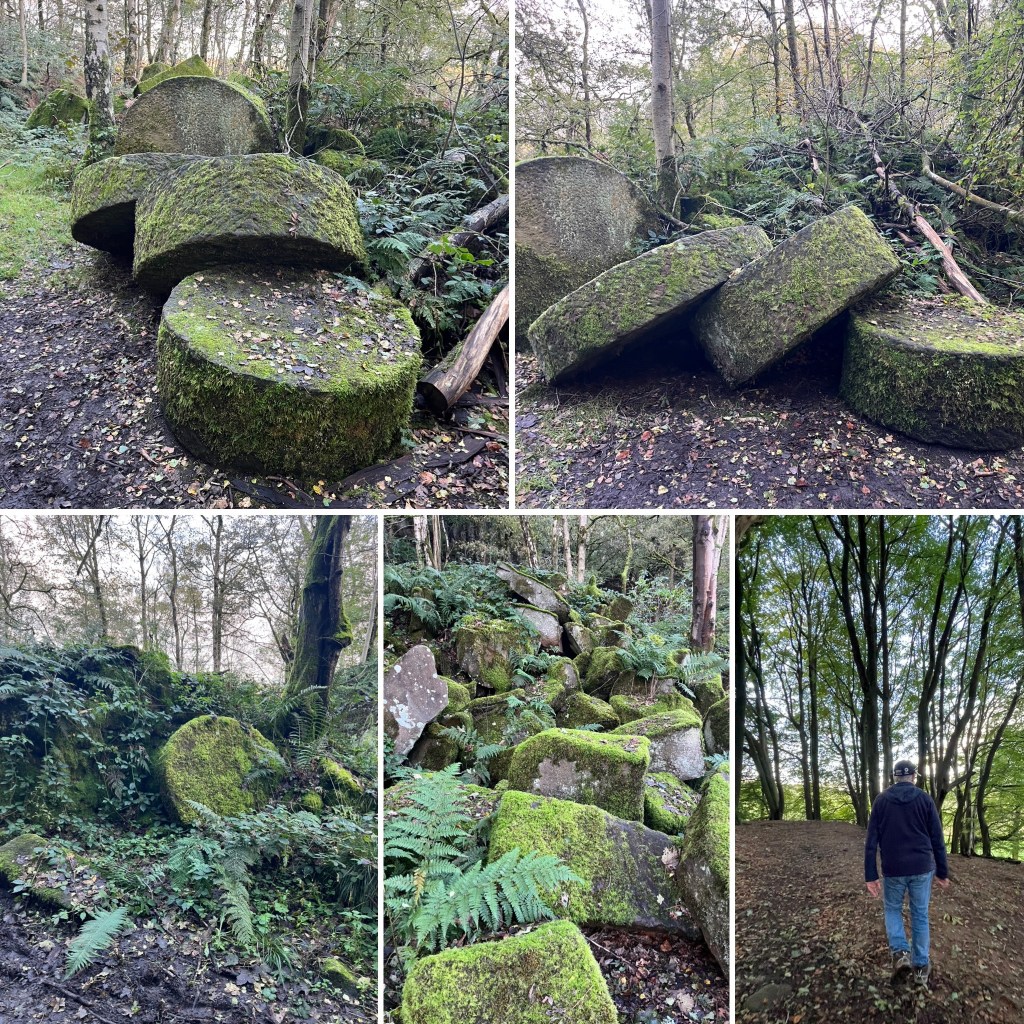
It was a lot further than we expected. We came across an old tower and realised we may have missed a turn.

Luckily we weren’t far away and not long after we had found the stone circle. It was a little underwhelming , but the trek in was stunning.

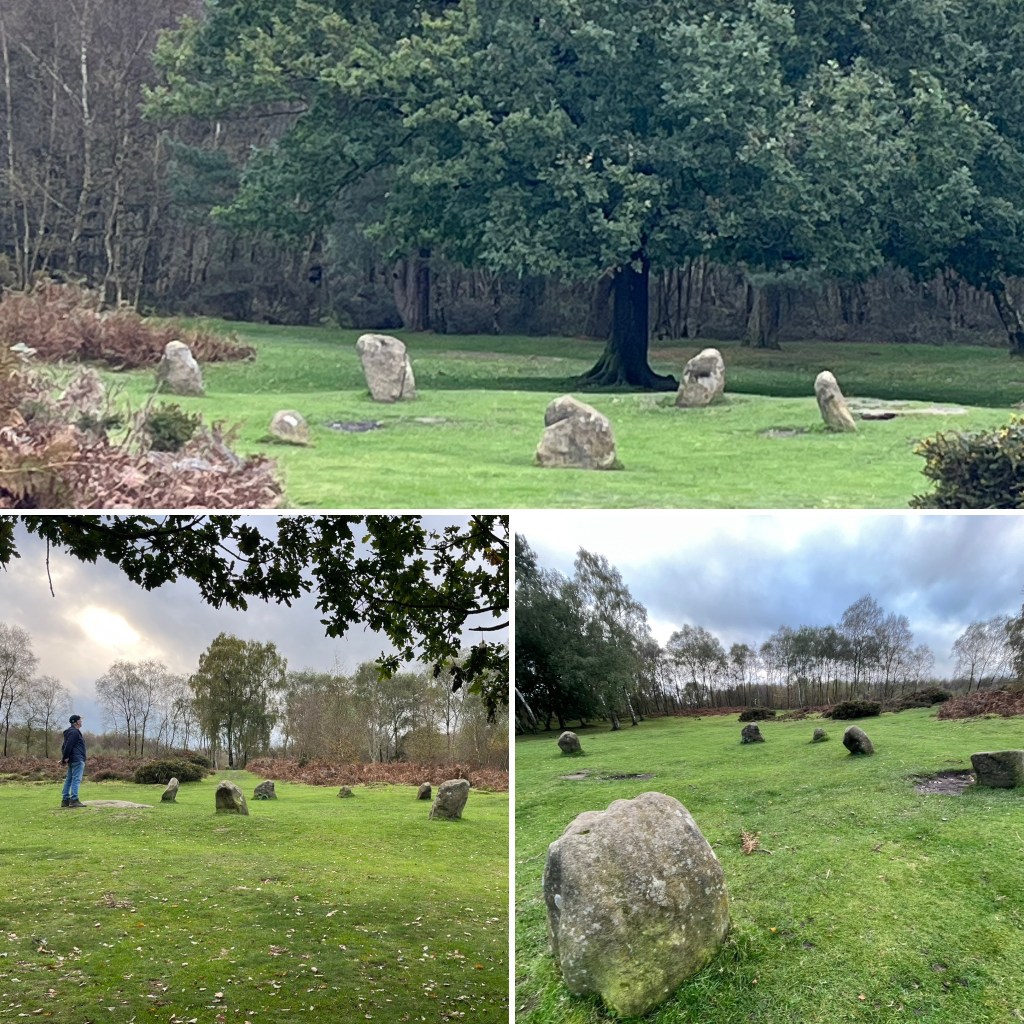
“The name of this monument comes from folk tradition, which says that nine women were turned into stone as punishment for dancing on a Sunday.

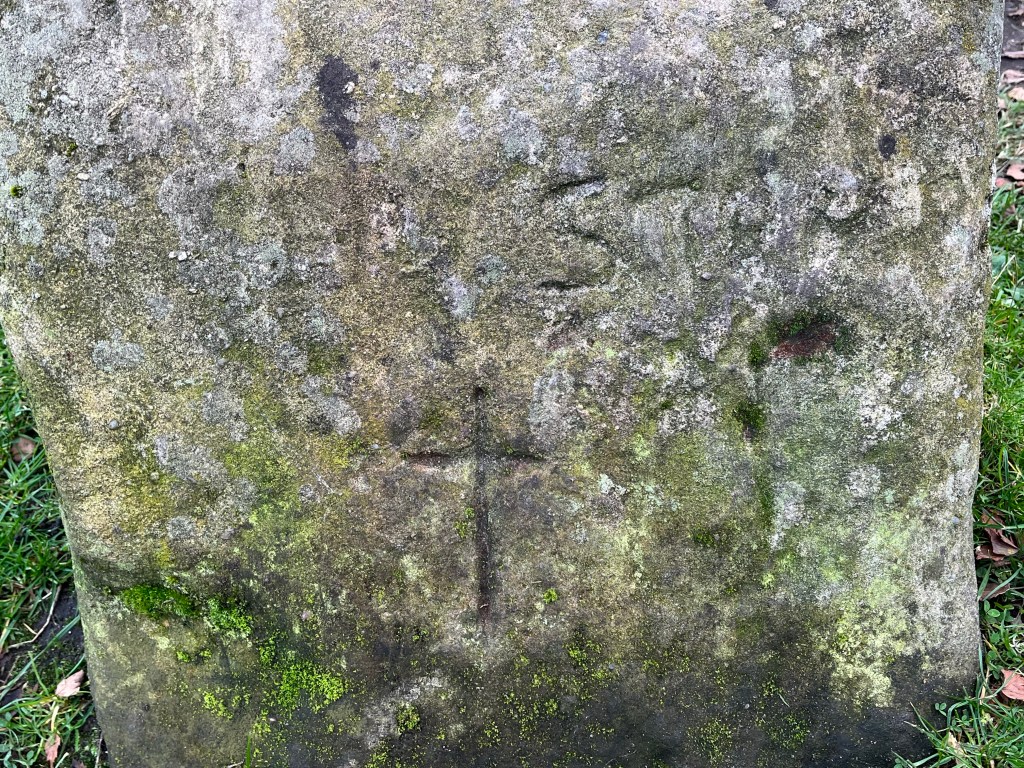
The music was played by a fiddler, who became the King Stone, which stands around 30 metres south west of the circle. The name carved into this stone, Bill Stumps, is also mentioned in The Pickwick Papers by Charles Dickens.” ( from info boards at site)
On our 45 minute return trip , we passed a “few daft hippy types” ( pagans?) heading up to the circle to “find themselves”. And it is Sunday (just saying!). ! Maybe we should have stayed longer, but it was getting late and we were keen to get back to our local for a bevvy or two.
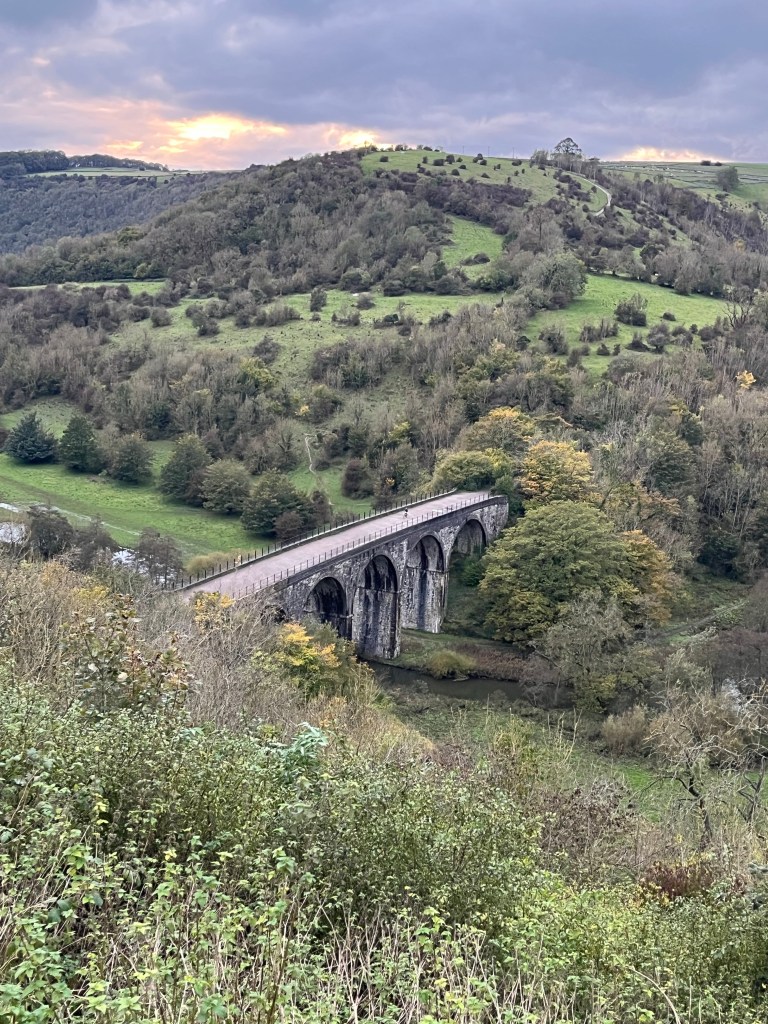
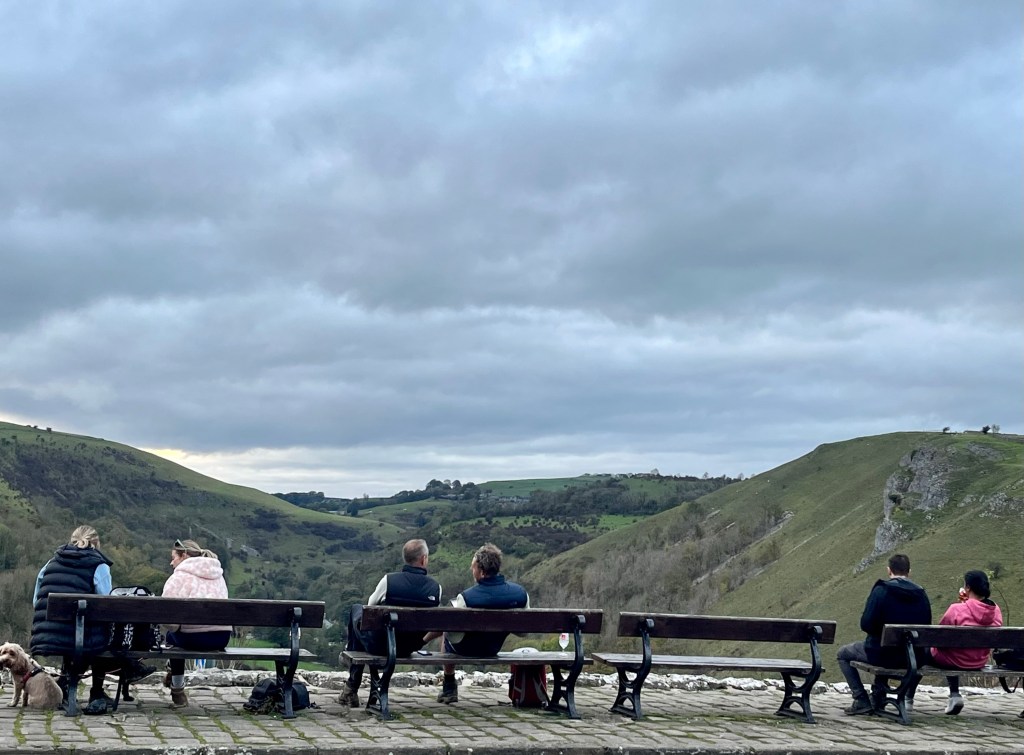
On the drive home we made a quick detour to Monsal Head. We stopped to enjoy the view looking back down over Monsal Dale and the old railway viaduct. It’s now an 8 1/2 mile rail trail and walking path.

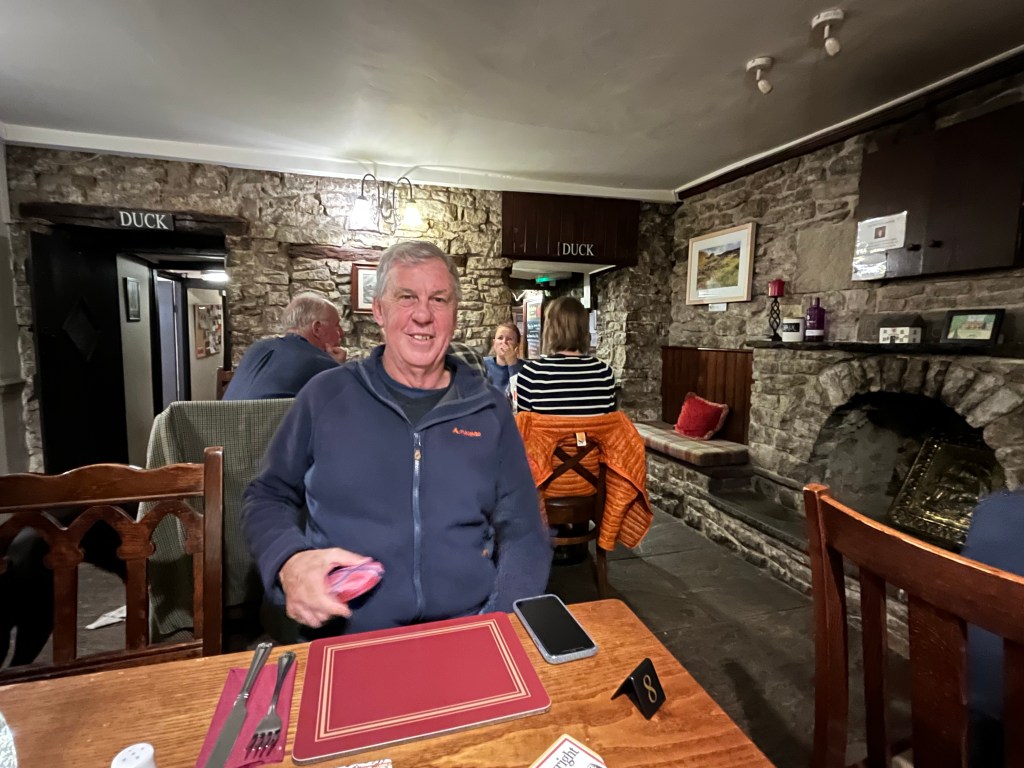
We parked “Baby Blue” at our Airbnb and walked to our local, “The Red Lion”. We hadn’t made a booking but we were hoping to get some dinner. Sadly there was “ No room at the Inn”. It didn’t matter, we had some provisions at home. Just as we were about to head home , the Publican, who we had met the night before, came and whispered to us, that they could now fit us in and had already set the table for us. Bingo!! Sunday Roast with Yorkshire Pud. (Much better than cheese and chips.)
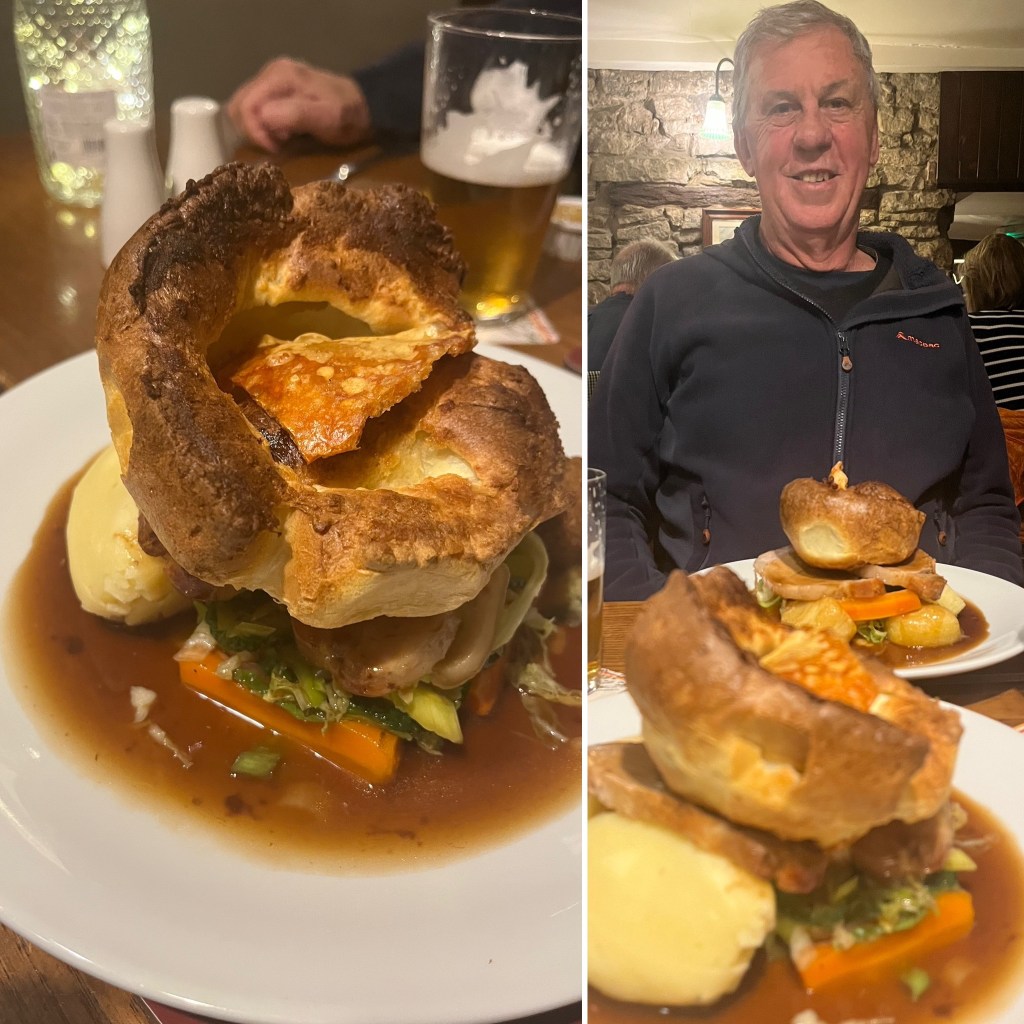
We waddled back home, full and tired. What a day. This “Poking around the Peaks” is heaps of fun… but so exhausting!!
 Jenny and Grahame Go ‘Round Again